Roleplayers Chronicle: Designer’s Diary

June 13th, 2011essays, interviews, rpg

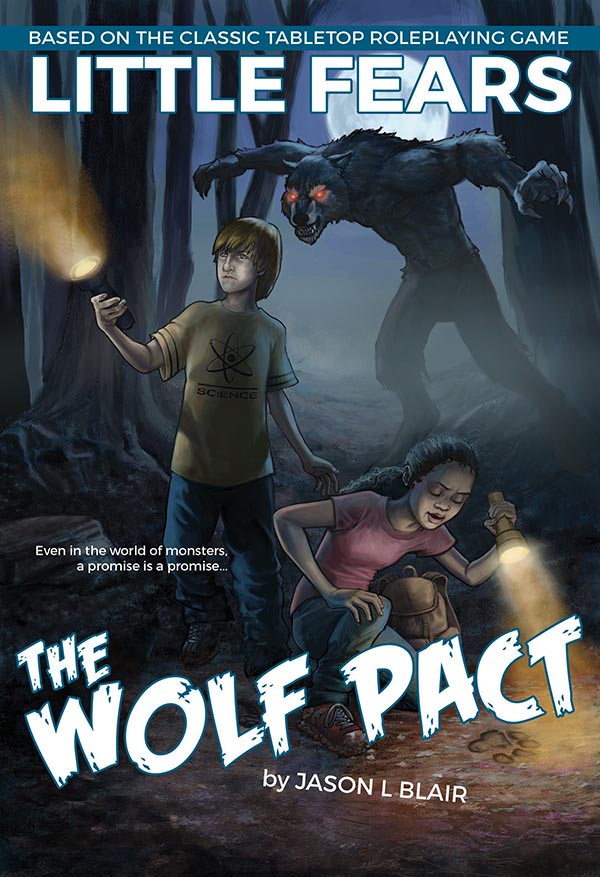
Aaron T. Huss, from Mystical Throne Entertainment, contacted me recently about doing a Designer’s Diary for his Roleplayers Chronicle website and I quickly agreed. The piece went live over the weekend and touches briefly on the work that went into my Little Fears Nightmare Edition project as well as some of the history behind the game.

You can check it out here.

Big thanks to Aaron for the opportunity!

No Comments »

Operation: Awesome – The 1000-Word Plan

May 5th, 2011essays, operation: awesome

One thousand words. It’s not a lot. But neither is a single grain of sand.

Earlier this year, I hit a hard realization: Writing wasn’t working for me anymore. I was writing in spurts. Some days I’d hit 3000 words but most days I wasn’t writing anything. Operation: Awesome was stalling, and I needed to jumpstart the engine if it was going to survive.

Part of Operation: Awesome was collecting the tools I should’ve gathered a decade ago: the study, the concept of form and genre (Step One), the dedication to a path (Step Two), and reading regularly (Step Three). I was doing well at those. I obsessed over structure and story, knew the type of career I want to have, and have been reading stacks of books in my audience and genre. Operation: Awesome had fixed a lot of my flaws as a writer, or helped me work on fixing them anyway, but I was struggling with one very important thing. I lacked the discipline to write (Step Four) and with every day I became less motivated to work on that discipline.

I don’t have a lot of time to dedicate to writing. Most of my time is spent raising my kids (and my dogs and cat and, well, the chinchilla pretty much takes care of himself). My wife and I don’t have the cash to put my son into daycare so, even though my daughter is at school, my attention is elsewhere throughout the day. When my wife gets home, I want to spend time with her and the kids. By the time bedtime rolls around, I’m out of juice. Sometimes she doesn’t get home until after 8 o’clock at night which leaves me even more exhausted (and is she too). After 13+ hours of always-on fathering, I just don’t have the word count in me. I sit and read or catch up on television or play games. Or, maybe, on rare occasion, hang out with friends.

In recent months, that routine had worn me to a nub. I was stressed to my limit, and I started to resent writing. I felt too much pressure to cram all my week’s writing into two days. Any other time I wasn’t writing, when I was spending time with family or catching up on books/games/shows, I felt like I was wasting time I should be writing. I was stymied.

My work and my life were too muddled and I wasn’t dedicating the time and attention I should to either. I had hit a wall, and I had to make a choice: Write or find something else to do.

In order to make sense of this, I did what my pretentious teenaged self should have done, I turned to the professionals for advice. I read somewhere that Cory Doctorow (of BoingBoing and Little Brother fame) has (or maybe had) a writing goal of 250 words a day. Stephen King, one of the most popular American novelists of all time, writes 2000 words a day.

That blew my mind. These guys weren’t nose-first in their work from dawn to dusk as I imagined. A lot of aspiring authors I know huddle in front of their screens day-in and day-out and, hey, if I could, I would probably do the exact same thing. But I can’t. I have other, bigger responsibilities, but I knew I could find a sweet spot between Doctorow and King, something that worked for me.

I looked at my schedule and contracts and realized to hit my deliverables, I only needed to write 1000 words a day. That’s it. About an hour’s worth of work. While I can’t park my son in front of the television for six hours every day, I can set him in front of Sesame Street or a couple episodes of Dora (or, his favorite, Dino Dan) and crank out 1000 words.

I decided that was my plan. I would write 1000 words a day, every day. But, I added some rules to make that more meaningful:

A Thousand Words of Fiction or Other Paid Work. Not blog posts, Twitter, emails, LittleFears.com updates, or even the work I do for AdventureGamers.com. The thousand words had to be on projects I was selling (or hoping to sell) or paid gigs. All that other stuff had to be done outside the goal, at night or during the extra work hours my wife’s days off allowed me.

No Making Up Missed Days. I couldn’t push one day’s work onto another. Meaning: I couldn’t skip Tuesday but promise myself I’d write 2000 Wednesday. If I didn’t hit my goal on a day, I had to accept that as failure even if I did write 2000 words the next day. (I take this from something attributed to Jerry Seinfeld: When you hit your day’s writing goal, mark it on a calendar. As the chain of marked days grows, you become more motivated not to break the chain.)

I Couldn’t Write Ahead. Same idea as above. I couldn’t buy a half-day Tuesday by writing 1500 words on Monday. Each day’s goal was separate.

I Could Go Over. If I felt inspired, I could do 1500 or 2000 or more. But I didn’t have to. 1000 was the goal.

That was a couple months ago. Overall, I’ve done well. I’ve missed days but not enough to beat myself up. On the positive side, I’ve noticed some big changes beyond the increase in productivity:

I’m Happier. Writing is working for me again. I get my 1000 done and the writing stress is gone. I’m not up late berating myself for watching Supernatural or playing games instead of writing.

I Have Gained Control of My Schedule. Since I know my output, I can better gauge my workload. This means I know at a glance if I can take on other work or if I have to turn something down. This is new to me (and is a big reason I was not good at freelancing for so long). But now I know my schedule and I don’t overload it.

I Jump Into Writing More Easily. Another great piece of writing advice, attributed to multiple sources, is to stop writing in mid-idea so you know where to pick up the next day. Writing only 1000 words puts me mid-idea almost every time so I come back to a project knowing where to start. The words flow from there.

I Have More Writing Energy. Because I’m not squeezing 5000 words out of my day’s imagination reservoir, I come into the daily goal refreshed, with a full day’s creative rest between rather small bursts of output.

So, after a long time struggling with my goals as a writer, I have found a system that is working for me. I’ve already handed in a bunch of contract work and am almost done with a new book for Little Fears Nightmare Edition.

A side effect of the new plan saw my last bit of contract work line up with May 31st, meaning I was free to start new projects on June 1st. After some noodling, I put down designs for the Big Summer Project, which I’ve codenamed Operation: Last Chance. This is something that terrifies and excites me in almost equal measure. See, there’s more to this new phase than I have said, more at stake than simply hitting a daily goal, but I can’t talk about it just now. I’ll leave the details of that for another time.

4 Comments »

Death of a PlayStation

October 13th, 2010essays, video games

I awoke Sunday morning to some terrible news: My PlayStation 2 was dead. Some kids were playing around and one of them, a friend of my daughter, had accidentally stepped on the disc tray, shattering it. As far as I can tell, it’s irreparable or, rather, it would cost more to replace the drive than replace the whole system. The culprit confessed and seemed genuinely sorry (or perhaps just scared of being punished) and, upset though I was, I accepted the apology and sent her off to play.

It wasn’t the loss of the physical product that saddened me. Sure, I still have a stack of unplayed PS2 games but I can buy a replacement PS2 on the cheap. What I mourn is what the PlayStation 2 meant to me.

I bought it at the beginning of Fall 2005. My wife, daughter, and I had moved from Cleveland, Ohio to Madison, Wisconsin for a job with video game developer Human Head Studios the year before. The move was not without considerable expense with us balancing rent here with mortgage there until our house finally sold that August. Moving away from friends and family was also a big deal. The sense of separation and the strained budget took its toll on us but we managed best we could. I was following a dream and that’s not always the easiest thing to do.

I had fallen out of video gaming for a couple years prior to the move. I got into gaming in the mid-80s with the 2600 and continued to game through every generation up to the original PlayStation. I loved video games and was passionate about them through my formative years up until my early twenties. But when the PS2, Dreamcast, and GameCube war began, I mostly sat it out. I picked up a GameCube midway through the generation but only had a handful of games for it. I took on other interests, leaving video gaming mostly on the shelf. But the job at Human Head, being surrounded by video game development and chatter, reignited that passion and I poked my head into the scene once again.

I remember coming into the office one night and sitting down to the office Xbox. I fumbled my way through some Grand Theft Auto: San Andreas and Destroy All Humans! and managed not to do too horribly for an hour or so. That little taste was enough; I was hooked. I wanted to get back into gaming and that right now. But we didn’t have the money for a new console alone much less the memory card, extra controller, and, y’know, games that come along with it. My wife had already sacrificed enough uprooting her life for my career, much less the strain we were still under, for me to push too hard for one.

That September though, a few weeks after the house sold and nine months into our new lives as Madisonians, I mentioned wanting a game system to my wife over a meal at the local mall food court, a sad attempt at a gambit as ever there was.

“How much do they cost?”

“About $200. Less if you buy it used.”

“Well, let’s take a look.”

I didn’t question it.

We walked over to the GameStop and started piecing and pricing the options. I had spent a lot of time watching G4 and reading online reviews. I knew I wanted a PlayStation 2. I had a mental list of the games I wanted to get along with it. It was late in the current generation so there were a lot of great titles to choose from. The store was running a 2-for-1 used sale and I took advantage of it, amassing a fine starter kit. I added it all up together and it came to about $200. There were probably better ways to spend that money but my wife didn’t flinch. She put her hand on my arm and smiled. “Get it.”

I walked out of that store with the biggest, dumbest grin on my face. I knew it was a sacrifice for me to get this, and I knew this meant my wife supported this new leg of my life’s journey to the fullest. As funny as it may sound, I have never been more grateful for any gift I’ve ever received in my life.

In the years since that purchase, I’ve caught up with the video game scene. I stay current on new titles, what’s in development, what’s happening with studios (especially since I have many good friends spread throughout them), and what trends are shaping the industry. That PlayStation 2, bought used five years ago, was the beginning of a journey that has led down some interesting paths and allowed me to land some great jobs in the video game industry. It’s allowed me to start crafting the life and career I’ve wanted.

It was also a symbol of my wife’s belief in me and investment in my crazy dream. And though that belief and investment are still there, more now than ever, the symbol is gone. And that’s what I mourn.

Goodbye, PlayStation 2. You weren’t always mine but you treated me like I was the only one in the world. You were always there for me, ready to do battle against overwhelming odds, topple screen-filling giants, belt out bar standards, jam on a plastic guitar, or just relax with some falling blocks and rolling balls. Thank you for the good times then and even better times to come.

2 Comments »

The Write Identity

September 21st, 2010essays, fiction, operation: awesome

See, I lost focus.

And that happens. I’m fallible and I know it. If I wasn’t, I wouldn’t have initiated Operation: Awesome. I would have just sat around wondering why no one recognized my genius.

A couple weeks ago, I talked about how I had some connections to a potential publisher and how I was looking at novel options suited for that. I let those connections overshadow something very crucial: the identity I want as a writer. Instead of thinking “What type of career do I want?” I thought “What’s my best chance of getting published?”

Now that’s not a bad question to ask. If you have an opportunity, hey, take it. I will never fault a creative for taking the money. In this case, the opportunity was something I’d like to have, yes, but not what I really truly want. My passion lies somewhere else. When I walk into a bookstore, I know the section that feels like home. I know where I want my books to be stocked. When I look at the list of authors I’m studying, they’re in that section. And while I read books in a variety of genres and markets, I have a clear vision of who I am as an author right now and where I want my career to start.

So I’m not writing one of the novels I talked about in that post. I’m still writing a novel. I’m just not writing the novel that makes sense for that connection. I’m writing the novel I want to write. The novel that makes me smile and makes me want to keep writing.

No Comments »

Hamlet’s Hit Points

September 2nd, 2010essays, rpg

A couple months ago, I had the honor of proofreading Hamlet’s Hit Points, the new work by esteemed game designer Robin D. Laws. In the book, Robin discusses how stories work and codifies the aspects that you find over and over again, the pillars of storytelling. He also dissects three classic stories in very different genres (Dr. No, Casablanca, and the titular Shakespearean work) by putting his code into practice. And all of this is done with an eye toward tabletop gaming.

Gameplaywright, of The Bones and Things We Think About Games fame, released the book at GenCon and it quickly sold out. If you have an interest in stories, games, and especially stories in games, and you missed your chance to get it at GenCon, you can get the book now straight from the publisher.

I’m always looking for solid texts on story and this is a good one. That it’s by a designer I know and respect makes it that much better.

No Comments »

The Three-Headed God

August 19th, 2010essays

Over at his blog, Daniel M. Perez shares the stomach-twisting playtest premier of his first tabletop design, a reimagining of the popular roleplaying game Vampire.

Daniel’s travails at running his first design reminded me of the terror I felt when running my first game, Little Fears, for folks outside my gaming group. In fact, when Little Fears made its print debut at Origins 2001, I didn’t run a single game of it at the con. I recruited my friend Greg Oliver to do the heavy lifting there. I spent my time at the booth where I was busy learning the ways of convention selling, The Pitch, and answering questions about this strange new game, and fielding a truly humbling industry and retailer response to the game.

Truth is, I’ve only ever been comfortable running one of my own designs, the brilliant-but-canceled Normal, Texas. Even then, the first public game was gut-wrenching (shaking from nerves, sweating a truly uncomfortable amount, laughing a little too long at every funny comment, taking too much time to explain the system) but I eventually found my rhythm demoing that game. I developed a short script that explained the mechanics quickly. I learned to always start the demo in media res. I set up the scenario and got to “Okay, what do you do?” in under a minute. I developed a handful of scenarios and characters I used over and over to the point that I could, throughout play, suggest a variety of actions for players if they were stuck. (Read as: I cribbed from previous sessions featuring that same character played by other people.) That became my demo paradigm. But Normal, Texas is a bit of an anomaly; I’ve never developed that same level of comfort with any other design of mine—no matter how much I’ve played the game.

I get requests to run Little Fears at conventions and I oblige where I can. But I’m not the best person for the job. I think that’s okay. Because designing and demoing are entirely different skill sets. Designing and selling are different skill sets as well. Yes, though closely related, demoing and selling are also different skill sets. Only a three-headed god would be great at all of them. But all are put to the test in the convention environment, moreso than anything else that went into the creation of the game.

In the tabletop world, you learn a lot of different skills, from editing to layout to print buying to conventioneering and only a few people truly excel at all of those. They’re crafts that, if you’re not a natural (and, man, who is), you need to study and nurture to really get good at them. When first starting out, you can only put your focus on so many of those things. If you’re a game maker, you focus on design which is the most important. You want a beautiful product, which will help move your game, so art direction and layout are important as well. If you want your book on shelves, learn your options for wholesale and retail representation.

That’s a lot to learn and that’s only half of it. Once you get a feel for all this, you start to learn your strengths and weaknesses in each field. The bold move is to learn it all. Dive right in; take on every responsibility as your own. It’s bold, yeah. It’s also dumb. That’s what I did and I don’t recommend it. Not at first, certainly, and maybe never. Since I was doing so much, I couldn’t devote the time necessary to truly excel at any one skill. My knowledge was broad, yes, but thin.

There’s no shame in handing off a design to someone else whose willing to demo your game. This goes for playtesting as well. Sure, you want the most direct and pointed feedback at that stage but you may not be the person who is best equipped to get that information.

You haven’t failed because someone else is better at selling your game than you are. There’s a reason the big companies have demo teams and salespeople. There’s a reason your favorite designer may not be running games at Gen Con or handling customers at the booth. It’s not (necessarily) because they’re aloof. They may just not be the best person for the job. Hey, they may be the worst person for the job. (Few things will turn off a potential sale faster than the overly-enthusiastic and tortuous hard sell that I’ve received from a fair number of designers.) You are probably not in a position to hire demo teams or sales reps but you probably have friends who can help out.

Along that same line, there are folks who are brilliant demo or sales people who aren’t great at design. And I’m not holding one above another here. As someone who has been in each position, those who are good at each skill are aces in my book.

I’ve been very fortunate in my career to have worked with top sales folk (calling out T.S. Luikart on this one) and demo people (looking at Caz Granberg here). They both (and others) have made this mid-level designer look good. To all my fellow designers who are also not three-headed gods, I hope you find good people as well (which may be the single best skill of them all).

3 Comments »

My Transformers Story

July 5th, 2010essays

Last week, publicist, personality, and friend to gaming Matt Staggs put out a call for authors to relay Transformers-related experiences from their childhood. A site he blogs for, publishing giant Random House‘s genre blog Suvudu, was running a week of articles focused on those robots in disguise.

Well, it just so happens I have a Transformers story so I wrote it up and Mr. Staggs was kind enough to include me in the bunch.

You can read my tale of woe and robots (and anecdotes from the other contributors) over at Suvudu.com.

2 Comments »

Preparing to be Awesome

June 30th, 2010essays, news, operation: awesome

A couple weeks ago, I mapped out the basics of my plan to reprogram myself as a writer. It’s a process I call “Operation: Awesome” because that’s an incredibly uninspired and pretentious title and nothing amuses me more than uninspired and pretentious titles.

I’m bringing it up again because the reprogramming isn’t as simple as following a five step plan. Yes, that plan helps. I’d say the plan has been essential for me even though I’m far from being the A-1 Top Storyteller/Writing Machine that I want to be. This is all a process and I’m in the mix. I’m also fortunate to be in a position where I’m applying what I’m learning and what I’m changing in a real world environment. I’m a working writer in the midst of evolution. I don’t foresee a point where I’ll throw up my arms, declare myself to be fully awesome, drop the mic, and walk off the stage. There isn’t necessarily an end to Operation: Awesome. But there was a beginning.

And it began prior to Step One. It began with conditioning myself. It began with making myself ready to be awesome.
Read More »

1 Comment »

Rattling THE BONES

June 29th, 2010board games, essays, news, rpg

Last September, I managed to convince the folks at Gameplaywright that I was worthy of being included in their next book. Their previous publication, the well-received Things We Think About Games, was buzzing around the gamer zeitgeist with supersonic speed and I knew I wanted to hop whatever train was leaving their station next.

For those who don’t know, Gameplaywright is the venture of two of tabletop gaming’s brightest stars, Will Hindmarch and Jeff Tidball. Through my serpentine path through gaming industry, I managed to connect with Jeff years ago. When I heard his outfit was putting together a new thing, I got in touch with him. He put me in touch with Will, who was heading up the next book, a collection of dice stories called The Bones. Will had a pretty full roster, which included smarter and more renowned folks than myself, but was open to hearing my idea.

I pitched him a manifesto, a defense of my favored randomizer: the six-sided die. Will and I hashed out the specifics and I set pen to paper. A couple weeks later, “The Die of the People – A Six-Sided Manifesto” was born.

Will was an amazing editor, cheerleader, and guide. I’d contribute to any book for which he’d have me.

Before you think me hyperbolic in my enthusiasm or insincere in my modesty, check out who I’m sharing page space with: Keith Baker, Greg Costikyan, Ray Fawkes, Matt Forbeck, Pat Harrigan, Jess Hartley, Fred Hicks, Kenneth Hite, John Kovalic, James Lowder, Russ Pitts, Jesse Scoble, Mike Selinker, Jared Sorensen, Paul Tevis, Monica Valentinelli, Chuck Wendig, and Wil Wheaton. Having my name on the list is humbling, to say the least.

Anyway. The Bones. It’s a book about dice. But not about the technical nature of dice. Not math, not chances. It’s about people, traditions, and superstitions. It’s about dice and gamer culture. I have the limited edition hardcover and, though I haven’t read it cover to cover yet, what I have read has been amazing. The standard edition is coming out at the end of this month. I highly recommend you pick it up for yourself, a gamer friend, or anyone who’s interested in games, culture, or the weirder parts of history.

1 Comment »

Operation: Awesome

June 8th, 2010essays, operation: awesome

Earlier this year, I kicked off Operation: Awesome, a multi-phase attempt to reprogram myself as a writer. I had spent far too much of my life under this delusion that the traditional rules of writing and story didn’t apply to me. I thought I could just riff and my stories would work. Most often, I didn’t finish the stories. My initial excitement and momentum ran out before I got the car down the road. A lot of the time, before I’d even left the garage. I didn’t understand how stories worked. I didn’t do the pre-production on my ideas to see if they were actually stories or just ideas or hooks with nowhere to go. I would talk a lot about a story I had when I actually had no such thing. I had a premise, maybe, but most often I had a character or a starting point or a scene. And those are not stories.

After a lifetime of saying I was a writer, I decided to actually do the legwork and become a writer.

I needed to push myself. I needed to learn my process and establish good writing habits. I knew I worked well with an outline (another late discovery). I’m a lazy person by nature with a history of feverishly writing down 1000 words then abandoning the story or jumping from one great idea to another without settling on one and doing the work to get it done. A big part of Operation: Awesome is fixing that. Is fixing myself.

You’ve heard this cliche numerous times: Being creative for money is a business. If you’re rolling your eyes at that, go somewhere else. My intent is to make a living from writing. To do that, I needed to be more than just creative. More than just a guy with good ideas. Everyone else you’re competing against, for an agent, an editor, a publisher, for the audience’s time and money, is creative. They all have good ideas. Being creative and having good ideas just isn’t good enough. You need follow-through. You need discipline.

At least I do. And I didn’t have it. But I was going to get it. I came up with Operation: Awesome and immediately started putting it into motion.

Phase One was learning the craft. For a guy who had spent the past ten years in publishing, in writing and game design, I knew frighteningly little about writing stories. I had the mechanics of writing down (spelling, punctuation, paragraphs) and an ear for dialogue (still my strongest suit) but no concrete idea about construction, payoff, character and story arc.

I studied screenwriting, particularly the late Blake Snyder‘s wonderful Save the Cat! series of books. It’s not a book of theory, it’s a book based of codified observations. Blake’s humorous and insightful approach to story construction was an eye-opener. I put Blake’s ideas into practice in late 2008 with a screenplay I’ve recently entered into competition (wish me luck!). I use his ideas in every story I draft. It’s my first step once an idea has taken shape. It’s my test as to whether an idea is actually a story yet.

Phase Two was laying out what type of writer I wanted to be. If I couldn’t define and sell myself, I couldn’t expect anyone else (agent, editor, publisher, reader) to. I needed to be honest about genre and market. I needed to hone my abilities and direct the other phases of Operation: Awesome toward that genre and market.

I know some writers hate defining themselves or, worse yet, think they defy definition. Yet, the successful authors I know, those who produce and sell, can tell you their market. They may branch out (or wish to) and may struggle to accept it but they know it.

I am aware of my interests and strengths and they are not burdens. They help me focus, help me sell myself, help me be a better writer.

Phase Three is research. As a creative, my life is research. Observation and experience is research. But I had a huge gap in my research process: reading. I read a lot as a kid but hadn’t made the time in recent years to get back to it. My life had leaned more towards games, particularly video games, so I spent my time with them. My reading had suffered.

Once I knew what I wanted to write, I needed to read. Lucky for me, what I like to write and what I like to read are the same thing. (Is this true for other creatives? I do not know.) I’ve been on a reading bender, having finished seven books in the past three weeks, with more waiting.

Phase Four is writing. Without this step, the other three are for naught. And by “writing” I’m not just talking about stringing words together. A big part is pre-production: mapping the beats, growing the characters, writing the outline. All of this is necessary for my process. Without them, stories either don’t get done, get done poorly, or need a lot of back and forth (which I could have prevented if I’d done the pre-production). Once that’s done, I do the writing. I don’t miss writing without an outline. It’s not more romantic, the stories and characters still have plenty of surprises, and I can lean on the pre-production when the muse doesn’t show up to work which means I can finish what I start.

Obviously, I go back through Phases Three and Four. They’re not dead ends or one-ways. Reading is an important part of the writing process. (Yet another old chestnut I ignored at my own peril.) Sure, Phase Five is probably selling books and a series or two but I’m not worried about that yet. My goal is to become a better writer. To become the writer I want to be. Once I’m there, I’ll think about getting published.

26 Comments »
© 2010-2012 Jason L Blair except, y'know, stuff that belongs to other folks.