Yesterday, on my Twitter account, I posted:
I prefer games that are more focused on stuff I can do than on stuff I need to know.
This is something I’ve been turning over in my head for a while. I have shelves full of games, including a lot of big lines, but I keep coming back to the same handful over and over again. While I rarely get buyer’s remorse over a game purchase, I do look at some and wonder what it would take to get me play the game. Or, perhaps more telling, to run the game for friends. For playing, all I’d really need is time and an interested party. But in order for me to run a game, I need it to really speak to me, to compel me to heave the conch shell of game moderator and all that entails.
Now, part of this is the game’s premise. I’m not that into standard fantasy. Of the broad genres, it’s my least favorite by far. I’m more easily drawn into urban fantasy, modern horror, and dark future games.
Some of it is design. I don’t care for systems that bend over backwards to simulate the real world. Back when I was more active in the game publishing scene, first with Key 20 Publishing and then at Human Head Studios, I didn’t go long without being pitched “the most realistic game system ever designed!” I didn’t bother looking at a single one. These types of simulations bore me. I want systems that have something to say or that emulate interesting source material, such as crime fiction or the beats of a television series. If I want a realistic game system, I’ll plagiarize a physics book.
But some of it, I daresay a fair chunk of it, is presentation. Not artwork and font styles, though they don’t hurt, but ratio of useful player material to game fiction and setup.
I have to be very smart about how I spend my free time; I don’t have a lot of it. Frankly, I have zero interest in reading 100,000 words on stuff that will never come into play. I don’t want supplements that expand upon this or advance an in-game timeline. I want premise, ideas, setting, and enough fuel to light my own fire. Some folks thrive on this stuff. They eat it up. They want to exist in a shared world that folks are participating in all over the world. I make no bones that this is a preference. I want to tell my own stories. I want tools to do that, not a bunch of fiction that’s just trivia to memorize.
I prefer games that are more focused on stuff I can do than on stuff I need to know.
This is probably what makes me such a bad freelancer. I want to create or expand game function more than I care to add to a game’s fiction. I don’t mind writing about someone else’s world (I can imagine a few game lines for which I’d like to write stories) but I want it to be whole fiction, not backstory, not continuation of metaplot. If I do add to another game line, I want to build a new facet, explore a new idea, add substance to what’s already there and give players more to do. By this I mean new organizations, new character types, new systems (magic, hacking, stunt driving, whatever fits the game or new idea presented for the game).
That said, I am currently available to novelize any major film or video game releases, thank you.
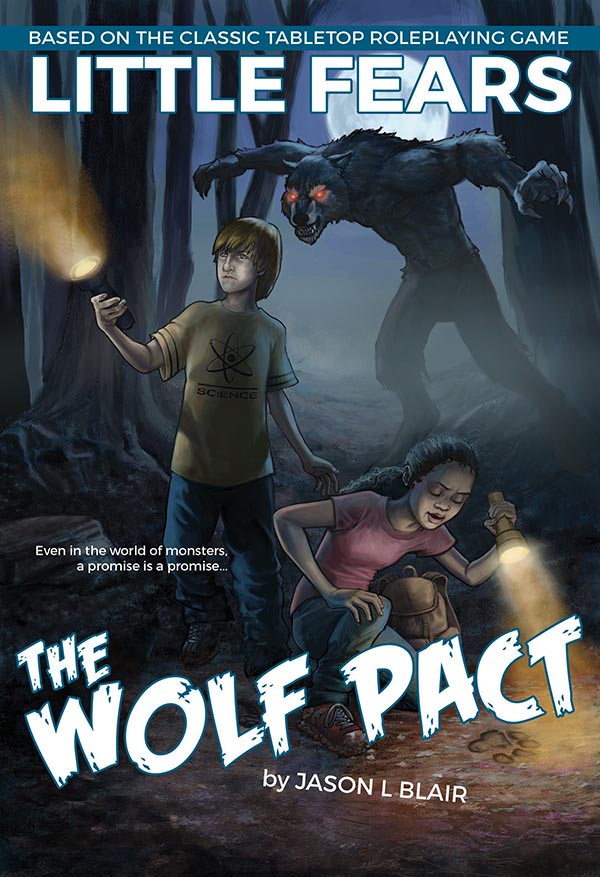
In my own games, that’s something I struggle with. I want to give players plenty of stuff to claw into without dictating a strict canon which will invalidate their own games as I continue to build on it with supplements. It removes power from the players, and games are nothing if not power tools. The supplements I’m currently designing for Little Fears Nightmare Edition are idea-focused.
I’m currently reading Robin D. Laws’ The Esoterrorists RPG. It’s a slim book, 96 letter-sized pages, with big margins and fair-sized type. It’s a quick read and a light system. It’s also not written for the new gamer so the text can be pretty assuming and doesn’t hold anyone’s hand. As a gamer with nearly two decades of RPG experience under his belt, I can ride its wave. If this were retooled for the newcomer, it’d probably be a signature thicker at 112 pages.
And I’m loving it.
The thing I like best about it: It’s all ideas. It’s stuff to do. There are two sections totaling five pages that I’d consider backstory. I’ll sum it up: “You are a normal person who is part of a secret society. You protect humanity from supernatural bad things.” That’s the hook. And it’s enough.
The rest of the book gives systems which provide the tools you need to go forth and create. The Esoterrorists is heavily biased toward premise. Anyone with exposure to The X-Files, Supernatural, and even straight-up procedurals like CSI can see how to use the premise and these pieces to great effect.
This isn’t to say I don’t like supplements. I do. I like supplements that give me new toys, new systems, and most importantly new ideas for stuff to use in my own games. One of my favorite things about Eden Studios’ All Flesh Must Be Eaten is that it’s a simple idea (“Zombies are on the loose. You have to fight them to survive.”) that is iterated again and again and again. The corebook focuses on the game systems you’ll need, based on the UniSystem (and, in the Revised corebook, d20 as well). The back is all different premises, brief histories behind the zombies, and samples of zombies built specifically for that setting.
Of all Eden’s lines, AFMBE is its most supplemented. And these supplements do what I love for supplements to do: They give me ideas. Character books, new types of undead, new (blissfully brief) backgrounds for zombie invasions, using zombies inside other genre settings (Westerns, pulp, sci-fi, etc). There’s no metaplot, no exhaustive breakdowns of thirteen core zombie infections and the five common mutations, or 3,000 years of history for the mass conspiracies behind the infestations and outbreaks. It’s all meat, no filler. Human meat, sure, but as my Aunt Zombilena once said, “Anything that can no longer press charges counts as food.”
Now, there are some major game lines I like to play. White Wolf/CCP’s World of Darkness line is one. But I don’t read the fiction, memorize the faction histories and current rivalries, keep up with the moving and shaking of the official game organizations. I don’t want to play in their game. I want to use their game rules to create my own game with my own group. I’ve been chastised before by fans of certain games who think I should not play a particular game unless I’m current with official canon.
I don’t mean for that to be indicative of my counter. I don’t think folks either fall into my camp or are slaves to canon. But I do know a fair amount of gamers who love to dig their hands into setting, who anxiously await the book that will tell them the history of their favorite player class or fantasy race. When I look forward to a release focused on a favored class or fantasy race, I’m looking for new bits, new ideas. I usually have to skim through the fluff to get to the parts I’ll use.
I realize mine is a preference, and possibly a minority one within the hobby, but I’m certainly not alone in it. I’m sure I might find my own exceptions—especially if a favored show was ever adapted into a full game line*—but the big book game lines rarely fit the mold. I have great respect for the folks who build those elaborate, incredibly detailed game worlds. Some of the designers are good friends of mine. As a whole, as writ, as law, those big books don’t appeal to me. As toolkits wrapped in six inches of padding, I’m much more comfortable.
Because above all, I’m not looking for something to know about a game world; I’m looking for something to do within a game world.
*For which I am also available, thank you.
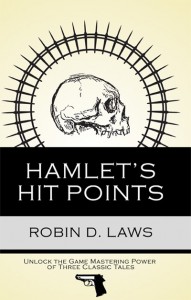 A couple months ago, I had the honor of proofreading Hamlet’s Hit Points, the new work by esteemed game designer Robin D. Laws. In the book, Robin discusses how stories work and codifies the aspects that you find over and over again, the pillars of storytelling. He also dissects three classic stories in very different genres (Dr. No, Casablanca, and the titular Shakespearean work) by putting his code into practice. And all of this is done with an eye toward tabletop gaming.