The world is not waiting for me. I used to know that. I used to hustle. I strove. I put it on the line. Now, after 25 years of working, succeeding, I feel as though the world should meet me halfway. But it won’t. I have to prove myself every single time out of the gate.
Maybe it’s not like that for everybody. Maybe you reach a certain level of success and things come to you. I imagine that’s true. I know friends whose achievements have opened big doors for them—but I also know they had to do the work that earned that opening and that, once through, even harder work began. So maybe they always hustle too.
I know my accomplishments have opened some doors for me. I am fortunate to have the credits I have, the job I have, the friends and network I have.
I’m not lazy in my day job. I work hard to create opportunities, to inspire others, to craft experiences, to help my company succeed.
But, outside of that, I wait for opportunities to come to me. I find it hard to motivate myself without certainty of reward. Throwing my hat into a new ring feels risky. I’ve experienced too much heartbreak, too much disappointment. When I sit down to work on a personal project, the shadow of “what if nothing comes of it” looms heavy and large. It can feel suffocating.
I’m turning 50 next month. There’s still so much I want to do creatively. I want to publish books. I want to write comics. I would love to work on a cartoon. I want to make a video game that I’m truly proud of and speaks from my heart. I want to release at least one more tabletop game.
Days are long but years are short. I cannot put this off much longer. I can’t keep kicking this can down the road.
My 40s were the most trying time of my life. The decade started with career turmoil, divorce, living separate from my kids, uncertainty in my future. But in the latter half came meeting an incredible woman and starting an exciting new chapter in life, a strong connection to my kids, a sense of happiness. It was the decade I reinvented myself personally. Amongst that, though, writing chapter books and comic scripts and middle grade novels that saw rejection after rejection. That made me gun shy professionally, artistically. I felt that I wasn’t worthy. That I didn’t have what it takes to get over in those fields.
People I trust, people who are successful doing that work, encourage me. And I appreciate their support. But sometimes doing the work and anticipating rejection just hurts too much.
I dunno. I don’t want to feel this way. I know I’m not done. I know I’m trying to stoke that fire inside me again.
I’m working on some personal stuff. It may never lead anywhere. I don’t control that. But I do control putting my ass in chair and the words down on paper. I do control reading, researching, and growing in my craft. I do control finding joy in the work and not in the work’s outward success.
I have no clue what the next decade holds but I don’t want to lose the time. So I’m promising myself that I’ll take advantage of it. Nothing is promised. The world isn’t waiting. But I’m going to keep on anyway.
You will invariably live during spans of time that you immediately recognize as cornerstone moments. I’m not talking about personal milestones like graduating school, getting married, and having children. Or professional milestones like landing your first big job, breaking into an industry you long to work in, or–for those of you unlike me–retirement. I’m not even talking about historical moments like the Challenger explosion, the fall of the Berlin Wall, 9/11, or the collapse of American Democracy in real time. Those are momentous, yes, but what I mean are smaller, quieter moments. Moments when certain things enter the zeitgeist that speak to something deep with you, resonate along your personal frequency, and you think, “This will forever be an important time even if only to me.”
Sometime prior to 2010, staid television titan, the Discovery Channel wanted to shake things up a bit. They wanted to create a channel that had appeal beyond their core, something that spoke to the teen and tween market. They wanted something newer, fresher, friendlier, and frankly cooler than their existing effort, Discovery Kids. So they teamed up with acclaimed toy and game maker (and minority stakeholder) Hasbro to create a new network that offered original programming that often leveraged the toy giant’s expansive portfolio of IP. This effort resulted in the pinnacle of post-millennium entertainment: the Hub.
(Later rebranded as Hub Network)
In 2010, I was in my mid-30s and well outside the target demo but children’s media has always been where my heart is. If you know me at all, you know I love middle grade fiction, shows, movies, and video games. My heart bleeds Goosebumps, Are You Afraid of the Dark?, Pajama Sam, Nancy Drew, and Just Add Magic. Yes, I enjoy tons of adult-focused entertainment options but there’s something about media in this lane that fills my soul. I’m not a nostalgic person but stuff like this brings me close.
Also during that time, I had two young kids and we loved watching stuff together. And, as much as I enjoyed the myriad and amazing offerings of PBS, I wanted options beyond edutainment.
While the Hub only lasted four beautiful, wondrous years, it gave the world a bounteous array of gifts. I highly recommend you watch any of the many videos talking about the Hub’s offerings but I wanted to call out a handful below. This list is so very far from exhaustive but it speaks to my personal favorites and, I hope, intrigues you to dig a little deeper.
R. L. Stine’s The Haunting Hour
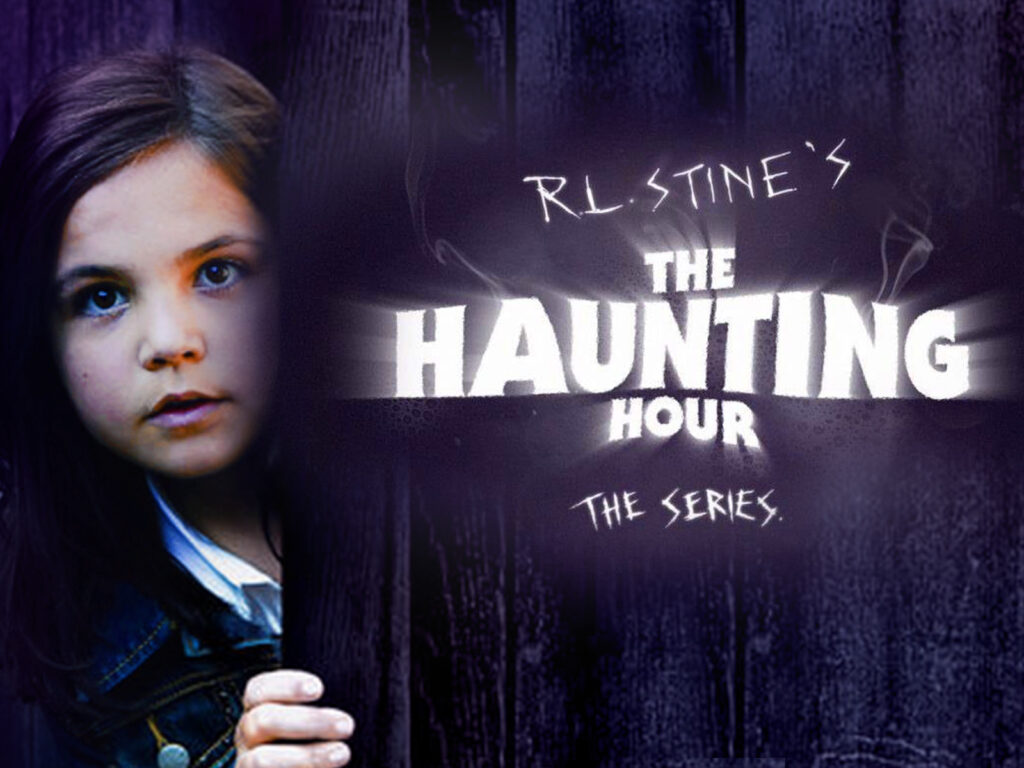
Let’s kick it off with the king: R.L. Stine’s The Haunting Hour. I am positive you have at least heard of the Goosebumps line of books and probably also the mid-90s television show that spun off from them but this four-season show, based off Stine’s anthology collections of the same name, exceeds even that classic series. (No offense, Goosebumps, I love you.)
Darker, edgier, and scarier than its better-known sibling, The Haunting Hour is an anthology horror series that ran for 76 chilling episodes. The stories run a familiar gamut–living dolls, spirits inside mirrors, haunted hotels, monsters in the house, nocturnal ice cream trucks–but the creators always found a spin that made it feel modern and far creepier than you expected coming in.
I highly recommend checking out this series. which you can stream on Prime, especially if you have a tween who is into horror. You’ll have fun recognizing the many young actors who went on to other projects.
Spooksville
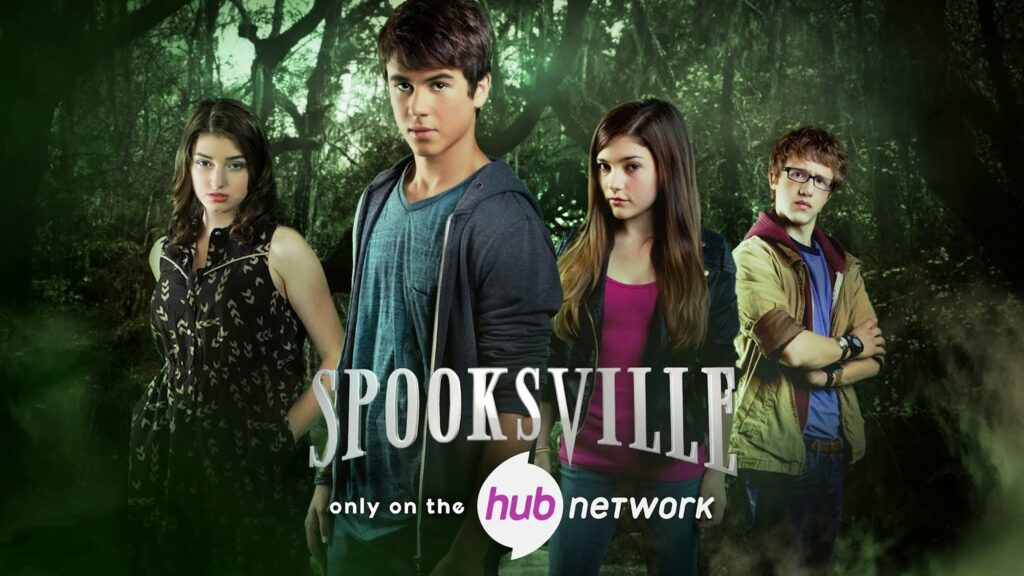
Staying on the “scary shows based on children’s books” train, Spooksville brought Christopher Pike’s classic series to the small screen. Unlike the above show, Spooksville is not an anthology but instead focuses on the tale of a teen named Adam whose father relocates the two of them to the small town of Springfield. While his new home seems all too normal at first, Adam, along with new friends Sally and Watch, soon discovers all softs of strange goings-on–from vampires to witches to aliens to cat-people–and even a surprising secret about his deceased mother.
Spooksville only ran for one season of 22 episodes which was highly disappointing at the time and, y’know what, remains highly disappointing even now. No, you won’t get the big mystery wrapped up in a bow but you will still have a fantastic ride. So watch it.
Spectrum subscribers can stream it online. Unfortunately, as of when I’m writing this, it is not available anywhere else. So…I guess don’t watch it. Unless you’re a Spectrum subscriber. Then do. Definitely do.
Clue
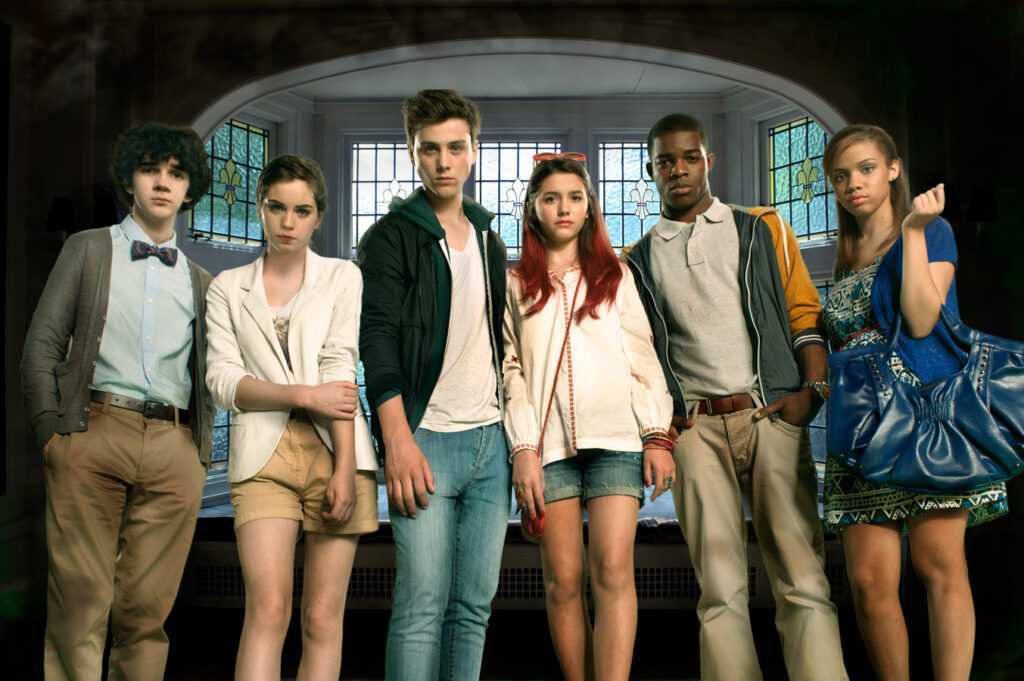
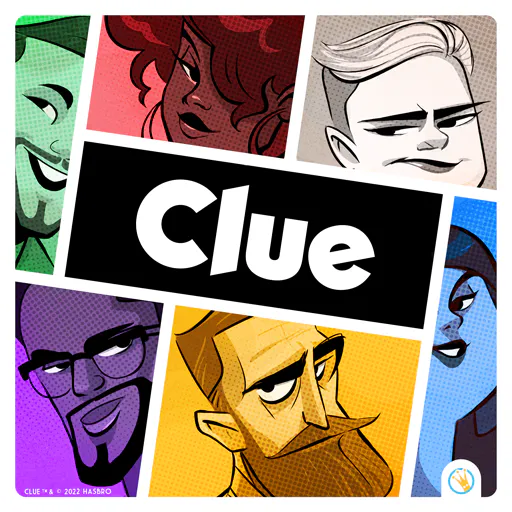
The Hub’s Clue was a five-part series kinda sorta based on the classic board game. The story focuses on six teens accused of doing something they then set out to prove they didn’t do. This leads them down a rabbit hole of conspiracy and the possible existence of a secret society called the Shadow Keepers.
I bet you can guess who is based on whom.
So, yeah, it’s a loose interpretation. But I love seeing old ideas chopped up, remixed, played with, and reimagined. This was super fun and you can stream it on Tubi or the Roku Channel.
My Little Pony: Friendship is Magic
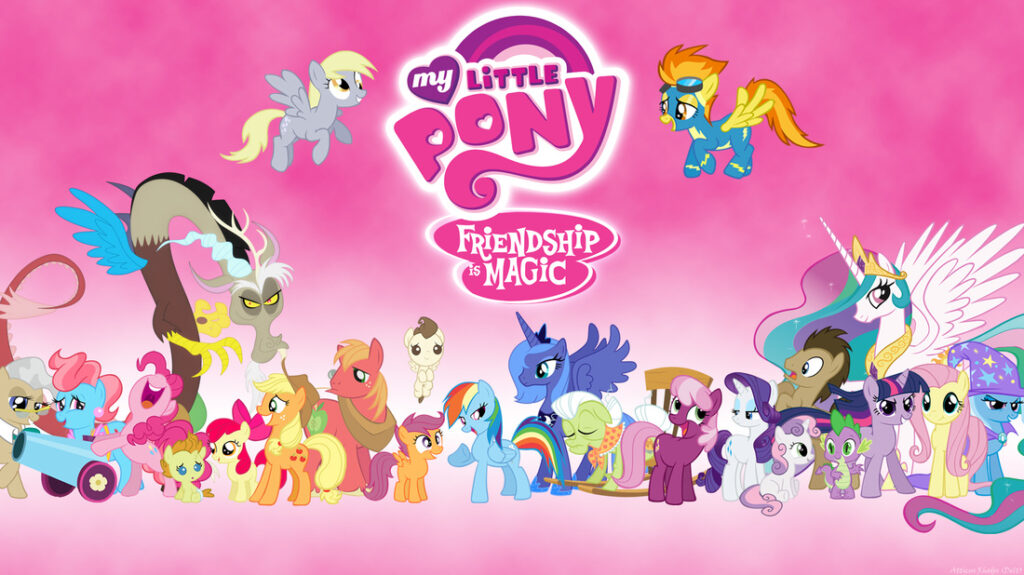
That’s right, My Little Pony: Friendship is Magic, the celebrated series that reinvented those plastic ponies of yore for a new generation and that gave the world the term “Bronies” debuted on the Hub. Not only that but since it ran for 229 episodes over the course of nine seasons, it actually outlived the network that gave it life.
Hands down the standout star of the Hub’s original programming, My Little Pony: Friendship is Magic is just excellence all around. From the adorable visual updates to the smart script to the dizzying array of pop culture references buried in each episode, this show is the masterclass on how to pluck a IP from the depths of time and reinvent it for the modern era.
If you’ve never watched it, you should. You can catch the entire run on Prime Video.
A Short Life but a Beautiful One
The above is but a small sampling of what the Hub offered. It also gave the world Transformers: Prime, G.I. Joe: Renegades, Pound Puppies, Sabrina: Secrets of a Teenage Witch, Family Game Night, and many more.
Sadly, the Hub was short-lived. The majority of the shows struggled to capture ratings and Hasbro reportedly reduced its investment in the channel. Discovery eventually decided to broaden the scope of the network to include everyone in the household coming together. Almost exactly four years after the Hub launched, it was rebranded to Discovery Family. Some of the Hub’s offerings survived, most did not. The Hub, in name and spirit, was gone but its legacy endured.
If you weren’t there–or were and just didn’t catch it–you missed out. There was something truly special about this channel. Something that harkened to 90s Nickelodeon–the reigning champion of kids’ television–but spoke to the moment. A channel design3ed for kids and folks like me. A channel that, even while watching it, I already felt a longing for.
Rest in Peace, the Hub. You were amazing. And you are missed.
My big goal for last year, and continuing into this year, was to play more games. I fell into a rut a few years back of just not expanding what I spend my time with. I played whatever I was working on, of course, and the games called out for reference or touchstones but that was it.
I’m happy to report that I played a lot of games last year—especially toward the end—and, even though 2026 started with challenges—I’m not letting that stop me and am continuing to dive into games that pique my interest. So, preamble done, let’s move into the meat here and talk about a little gem I’d been meaning to play for a while and am glad I finally made time to do so.
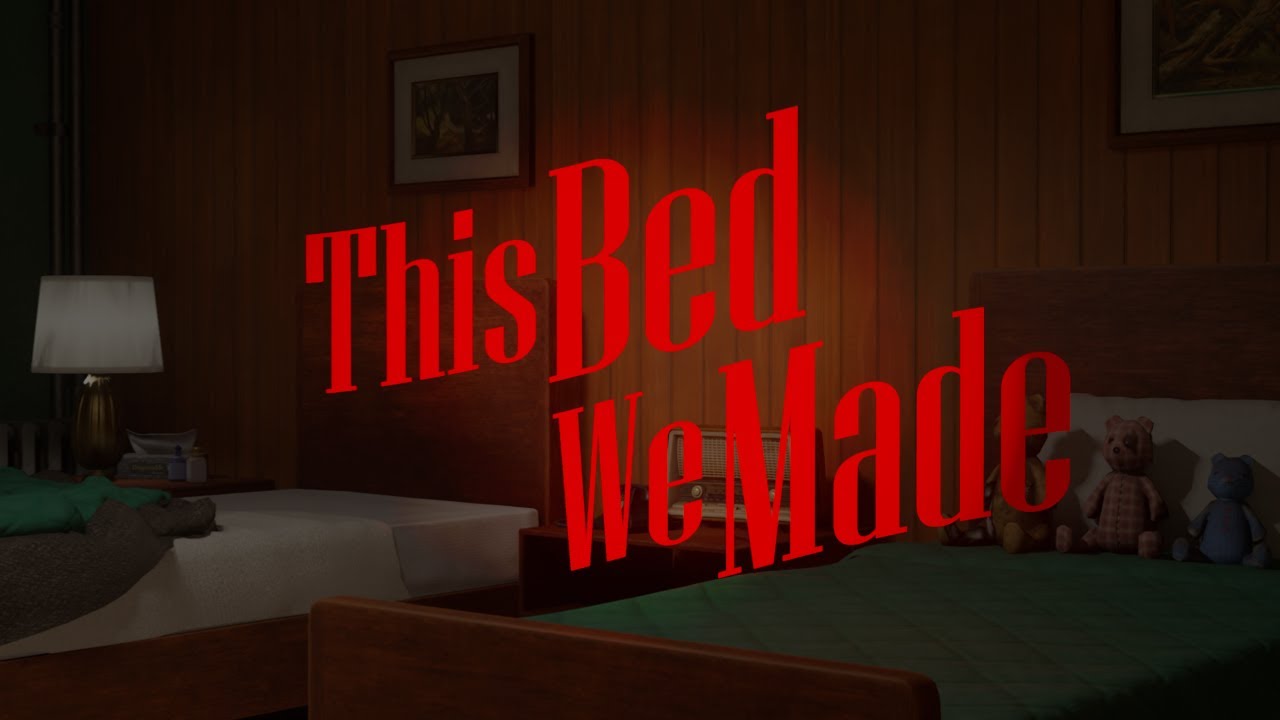
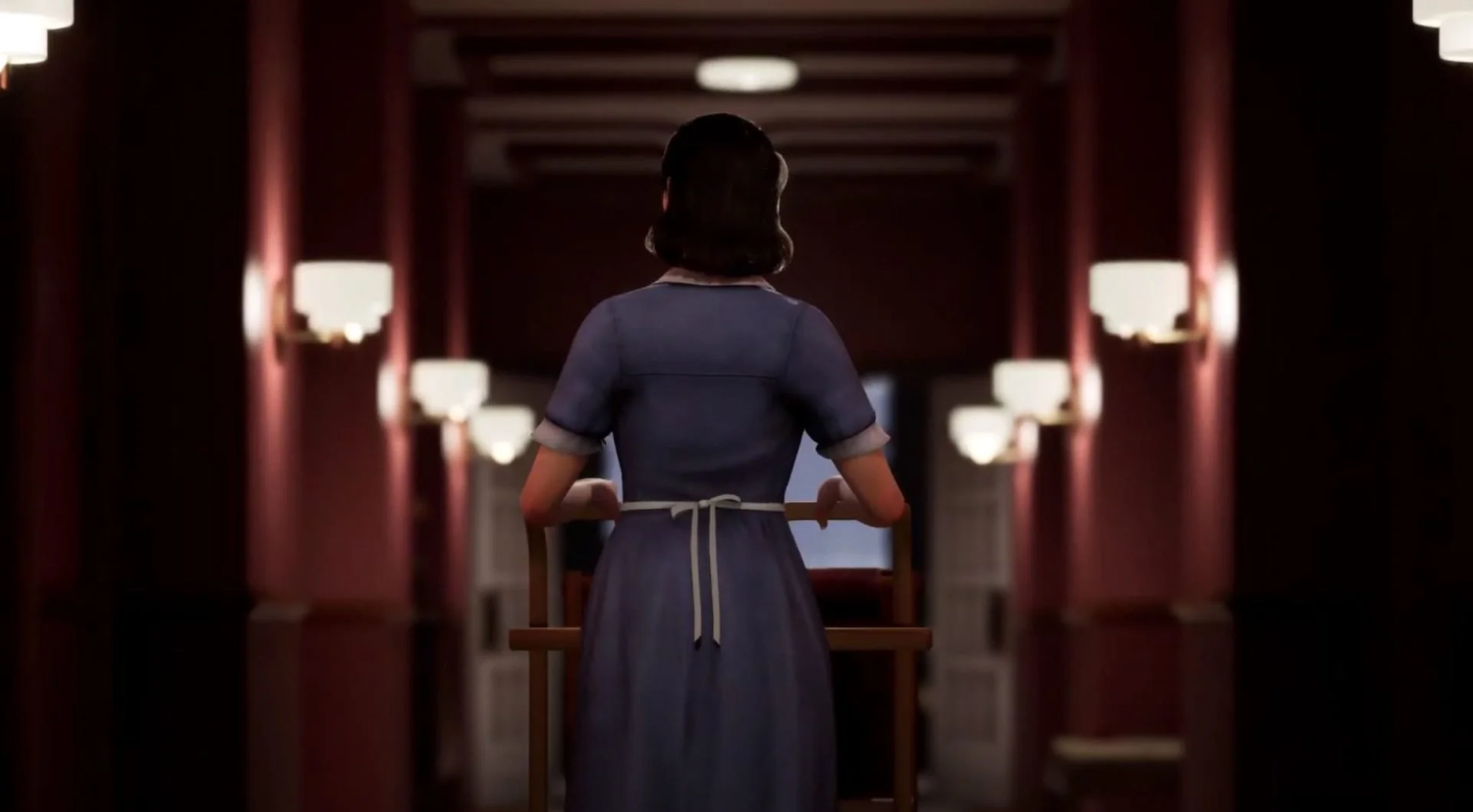
I love a good noir title screen.
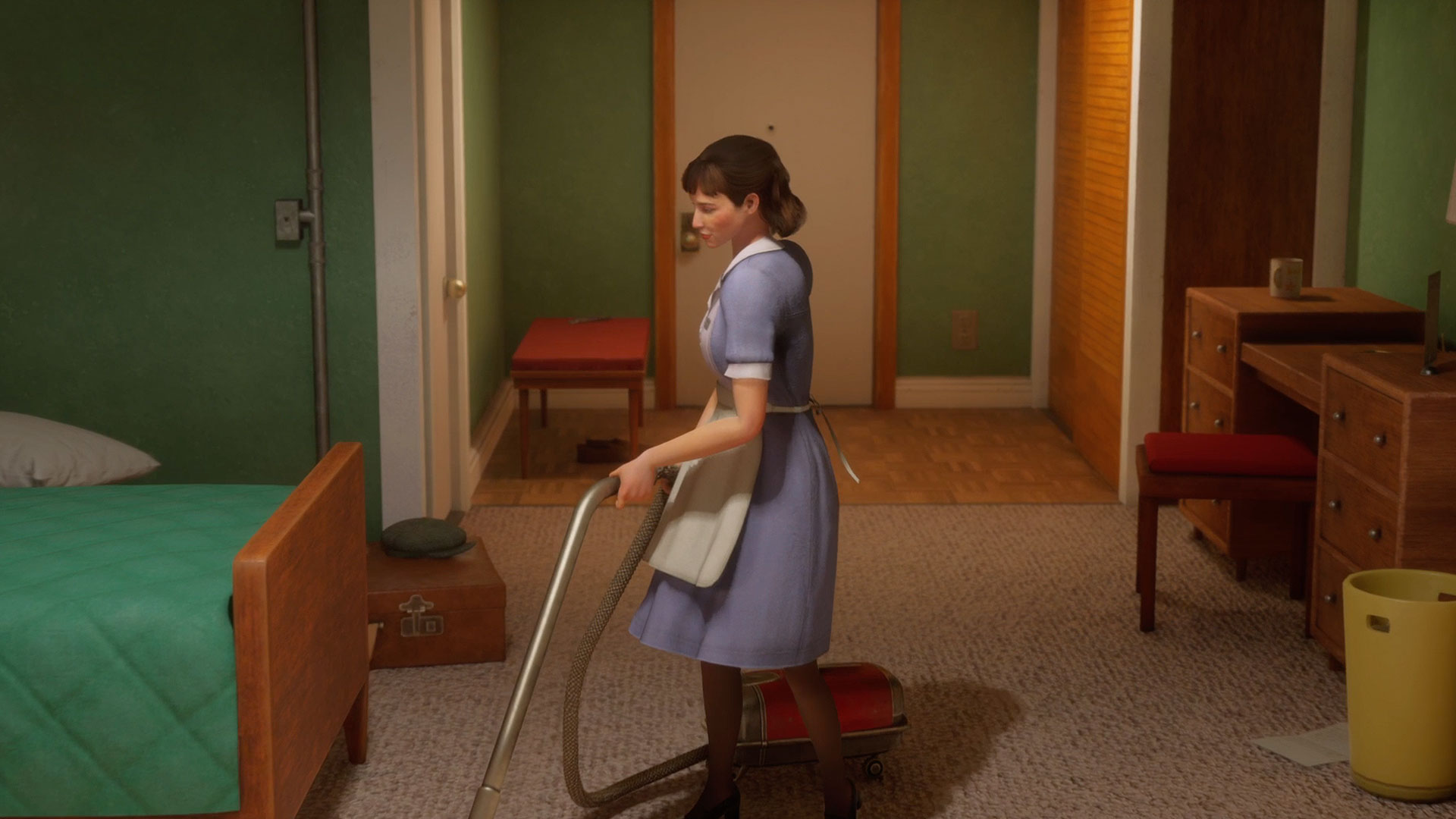
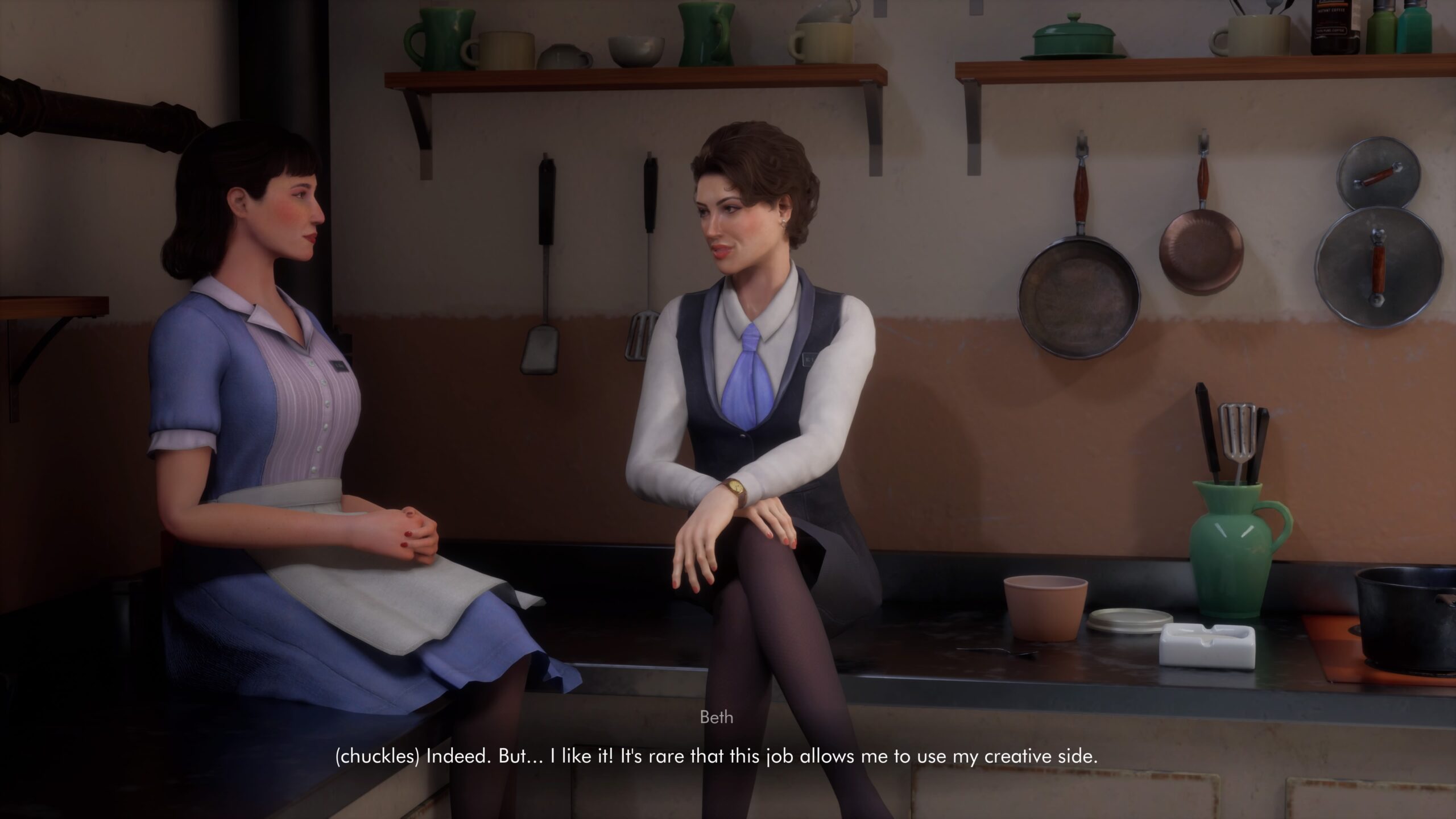
This Bed We Made is a narrative adventure game set in 1950s Montreal. You are Sophie Roy, a maid at the Clarington Hotel who can’t help but get wrapped up in the lives of the people who stay there. Whether Sophie is a good housekeeper is up to you but, no matter what, she is an excellent snoop. The game is all about routing through hotel rooms, looking through other people’s belongings, talking to other members of the hotel staff, and piecing together the clues over a larger mystery. Taking place over a single wintry night, you will become embroiled in a tale of love, deception, and dark deeds while you clean mirrors, make beds, and decide which bits of evidence to keep out and which to throw away. The setting, tone, characters, and writing all converge in a poetic noir-tinged tale in a capsule-sized but beautifully-realized world.
The game is built on the foundation of choices matter. I can’t speak to the narrative flowchart that underpins this game but I can speak to the player experience. I legit fretted over whether or not to toss something in the garbage, whether I had left something out in the open or not, and I was disappointed when I realized I had made a mistake I swore I wouldn’t make. I considered each dialogue choice carefully and wanted to make sure I protected the folks I wanted to keep safe. In the end, even with some failures on my part, I was still completely satisfied with the story and wanted to play it again.
And, at around 4.5 hours per playthrough, you can play it again to make other choices—some big and some small—to see how the story adapts to your decisions.
Even what you choose to clean or leave dirty impacts the story.
The first game by Montreal-based Lowbirth Games, This Bed We Made makes for an impressive debut. It is exactly the type of game I drift toward. It has one big idea, a setting you don’t see often, and it wears its passion on its sleeve. A game about a snooping maid in mid-century Canada who isn’t secretly an assassin or superhero isn’t going to get a nine-figure budget and thank goodness for that. These games should be small. They should be focused. They should bear the charm of each hand that helped create it. And This Bed We Made does just that.
The game developer’s lament.
If any of the above sounds interesting to you, I encourage you to give it a try. As of this post, the game is 40% off over on Steam and Xbox (and also on PlayStation at full-price) but, even if it isn’t on sale when you see this, throw some money at these devs. They just—mere days after I played their first game—announced a new one called Lost & Found. This short-form followup to This Bed We Made sees Sophie as a hostess on a cruise liner in the 1960s and I can’t want to check out.
We may be on the downswell, culturally, with our fixation on superheroes in films and television but I still feel there is plenty of room for superheroics in interactive entertainment. Rocksteady set the formula with their iconic Batman Arkham series. And Insomniac followed suit with its excellent Spider-Man titles and has their take on Wolverine on the way. Other titles, such as the criminally underrated Gotham Knights, also bring superhero action into your living room. And then there’s Tribute Games‘s Marvel Cosmic Invasion which builds on the classic beat-em-up genre and narrative games such as AdHoc‘s Dispatch that aim to tell the larger tale of managing superheroics in the city.
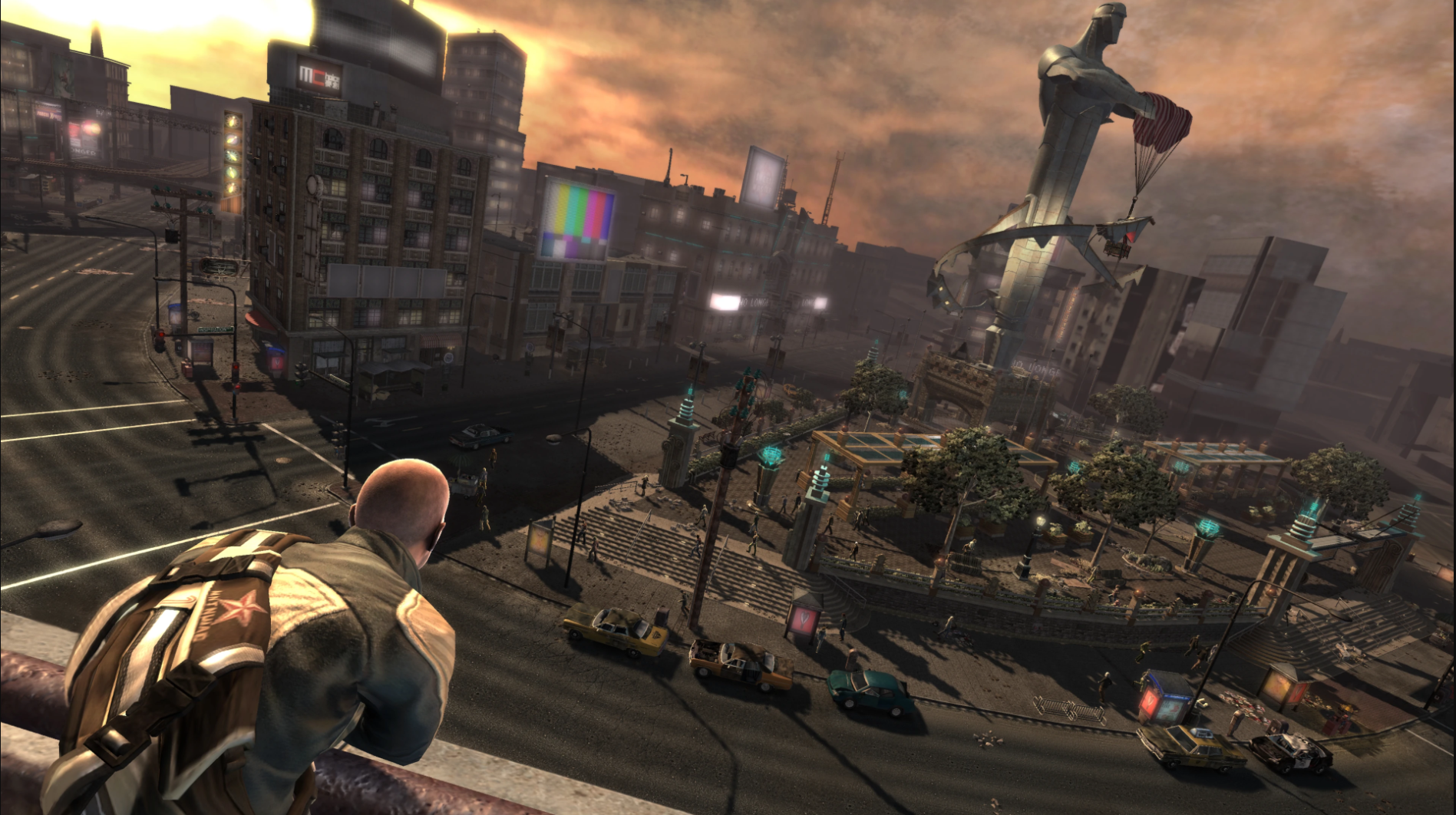
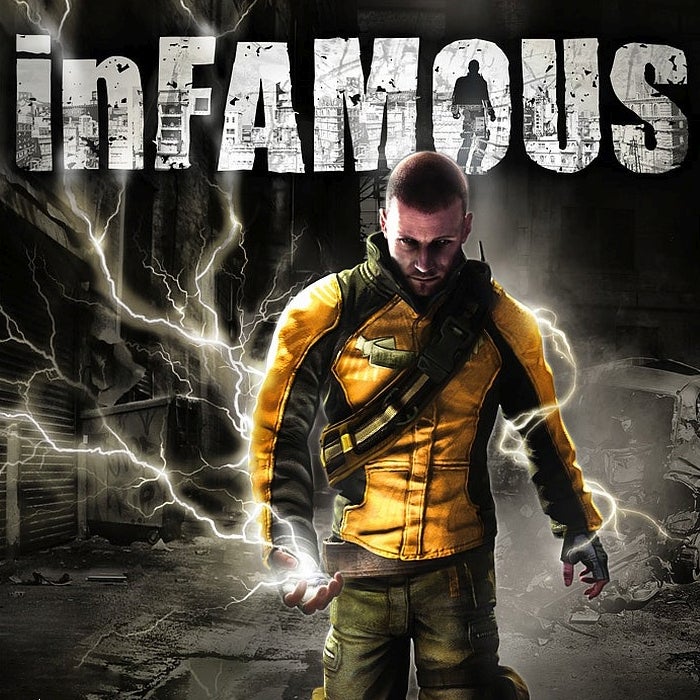
Okay, so maybe there are a lot of superhero video games. And maybe a lot of them fit into the open-world action mold. But Sucker Punch‘s grittier, more grounded Infamous stands tall in the field and is a game I would desperately love to see make a comeback.
Talk about standing tall.
Infamous was developer Sucker Punch‘s big new IP after having released the original (and still unmatched) Sly Cooper trilogy. Published by the studio’s new owner and PlayStation platform holder, Sony, the game was a marquee title for the system. A hard pivot from the developer’s previous series, Infamous replaced the bright and cartoony visuals of Sly Cooper with a darker, dirtier aesthetic. The world wasn’t populated by anthropomorphic do-bads and a crime syndicate led by an owl but average humans and an oppressive government. The protagonist wasn’t a lovable rogue but a conflicted man who got to decide his fate: noble hero or self-serving anti-hero.
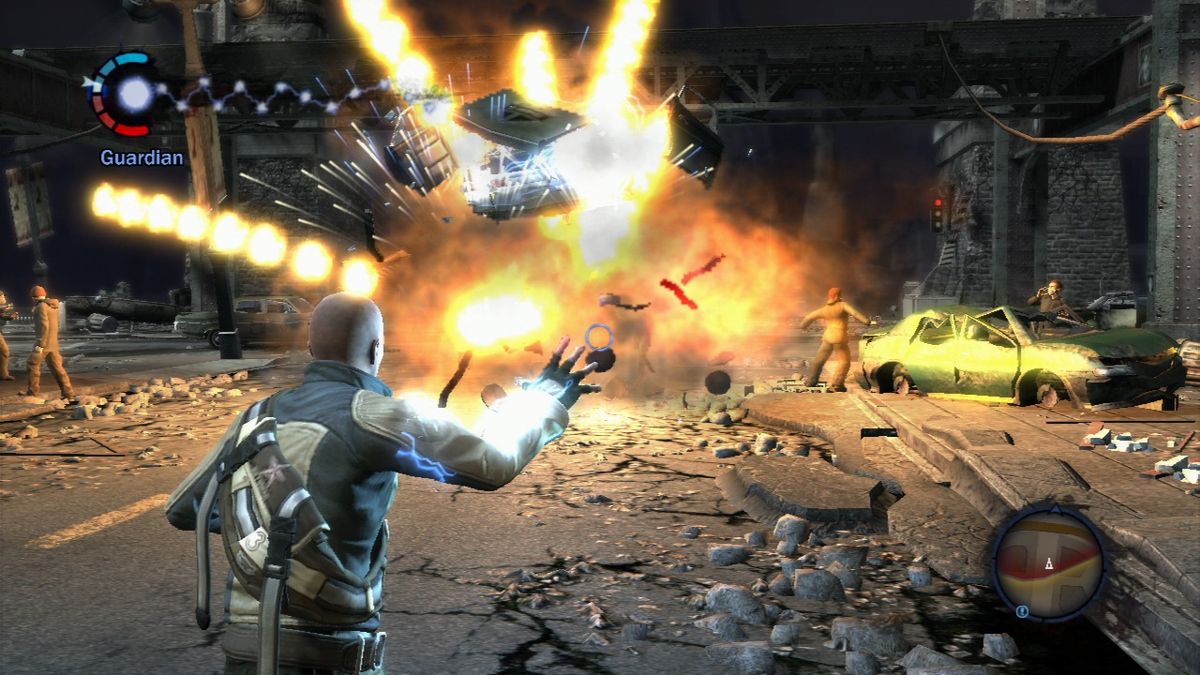
In the game, you play as Cole MacGrath, a bike messenger in the New Yorkesque Empire City who ends up standing dead center when a bomb goes off downtown. Instead of killing Cole, the explosion turns him into a conduit–the world’s term for superheroes–and gives him the ability to manipulate electricity. He can shoot current from his hands, fire ball lightning from his palms, and even generate lightning storms. As any good superhero can, he can also climb buildings and fall without taking damage, and ride the rails around the city. Unfortunately, due to the fact he’s constantly bristling with electrical energy, Cole cannot operate a vehicle or come into contact with water. What he can do—what he must do—is track down the person responsible for the explosion and his condition. A mysterious man known only as the Beast.
So, you have an inciting incident (the explosion), you have an inverted world (electrical superpowers), a goal (find the Beast) and now you face the question: how do you accomplish it? As a hero? Or as a villain?
And asking that question—and giving meaningful context and reward to your answer—is what helped Infamous stand out from its open world peers. While Bioware was already exploring that space, most famously with Star Wars: Knights of the Old Republic and Infamous‘s contemporary Mass Effect—this was our (at least my) first time seeing it outside of the roleplaying genre.
It’s okay. That car was a wanted criminal.
As Cole, you will face critical decision moments in the narrative but also in the moment-to-moment gameplay. Heal a wounded civilian or drain what’s left in them to heal yourself? Do the hard thing yourself or force a rando to do it for you? Players got to mold who Cole is: a savior of the people or a menace to society. It’s the classic “what would you do with Superman’s powers” chestnut turned into a game. And it worked really well. Your dominant path showed on Cole visually but also in the upgrades that became available to you. People in the street treated you differently depending on whether you were headed down the good path or bad. Completing one path’s side mission locks out the other’s. And, of course, story elements and the final act changed as well.
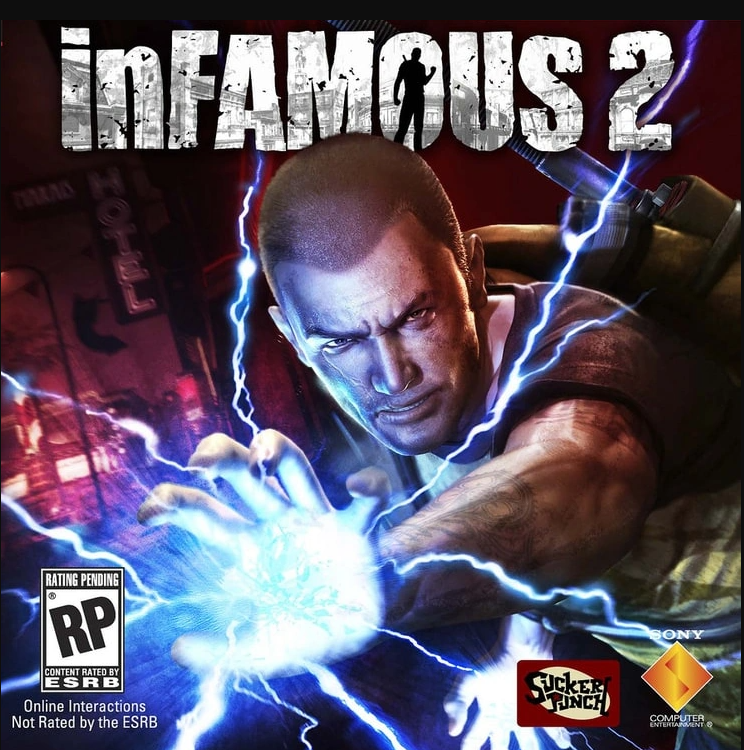
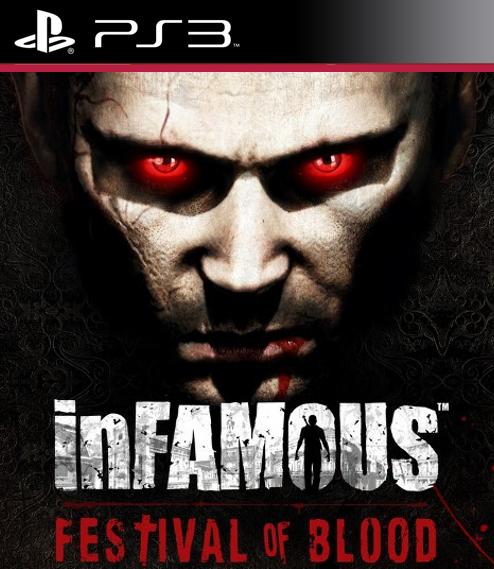
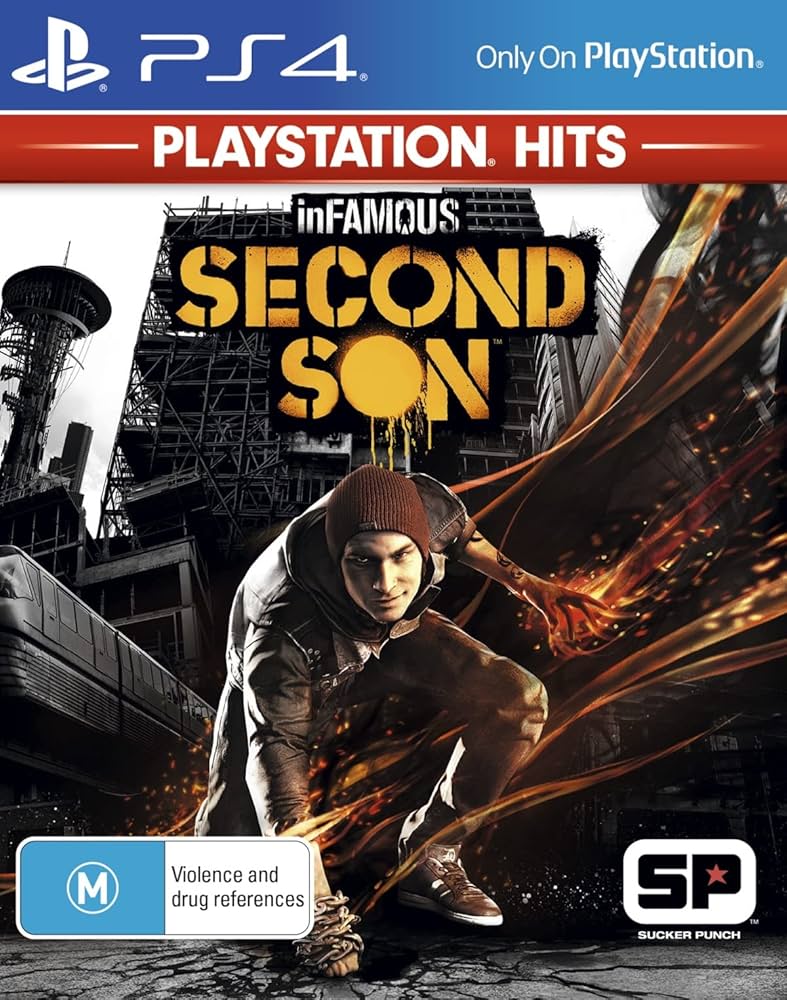
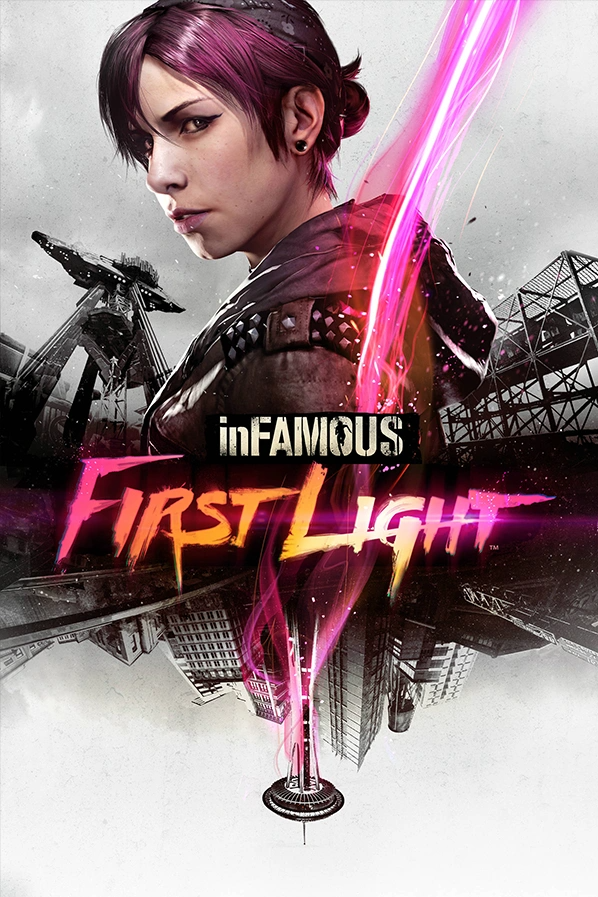
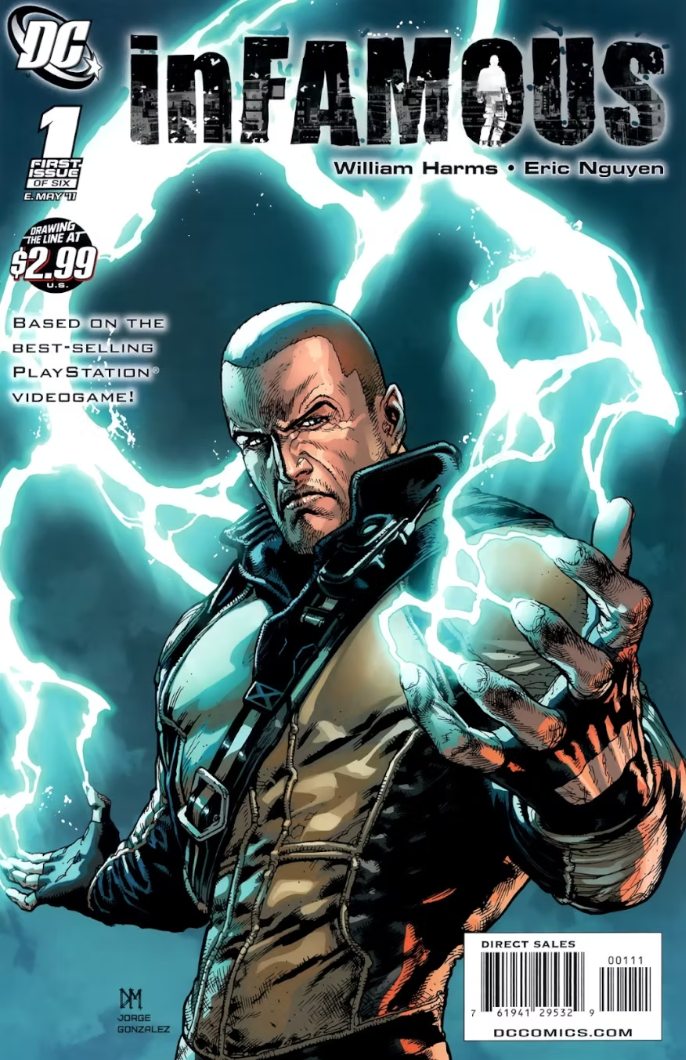
Infamous spawned quite a few follow-ups. The sequel, Infamous 2, took Cole to the New Orleans-inspired New Marais. The Halloween spin-off, Festival of Blood, is an apocryphal side story told by Cole’s buddy, Zeke. In it, Cole has been bitten by a vampire named Bloody Mary and must traverse the gulf city to kill her or be enslaved by her forever. When the series jumped from PS3 to PS4, the location and hero changed as well. Infamous: Second Son moves us from the fictional cities previously established to the very real Seattle. A new part of the country but also the home of the developer. The game’s protagonist, Delsin Rowe, is a graffiti artist who gains the ability to absorb other conduit’s elemental powers—from neon to smoke to concrete. The downloadable side story, Infamous: First Light, is a prequel that focuses on Delsin’s friend, Fetch, and her fight against the military force that once held her captive and the drug dealer who did her wrong. All of these titles kept the grounded feel, the elemental qualities of the powers, the parkour and rail-riding, and the “good or bad” branching decisions. The franchise also spawned a six-issue companion series published by DC Comics.
After the fifth installment of the franchise, Sucker Punch moved on to the samurai saga genre with 2020’s Ghost of Tsushima and last year’s standalone sequel Ghost of Yotei. Both excellent titles and, again, a departure from what Sucker Punch had been developing until that point.
Much like the Uncharted series, that I would eventually come to absolutely adore, I struggled getting into the Infamous. Despite a few false starts, though, it eventually clicked. And, once it did, I couldn’t get enough. I have played every title to completion—always choosing the good path, thank you—and it is a series that my soul aches to see continue.
If I had the chance, I would give a new entry in the Infamous my all. In this post-Endgame world of postmodern supers, the franchise stands apart not as an ironic indulgence or a winking dissection but an earnest addressing of the possibility and consequences of power. As every open-world superhero continues to build on Rocksteady’s Arkham formula, a new Infamous would continue along its own distinct evolution. Confident and convincing, a new game would continue to ask the question: Is it better to serve the world? Or serve yourself?
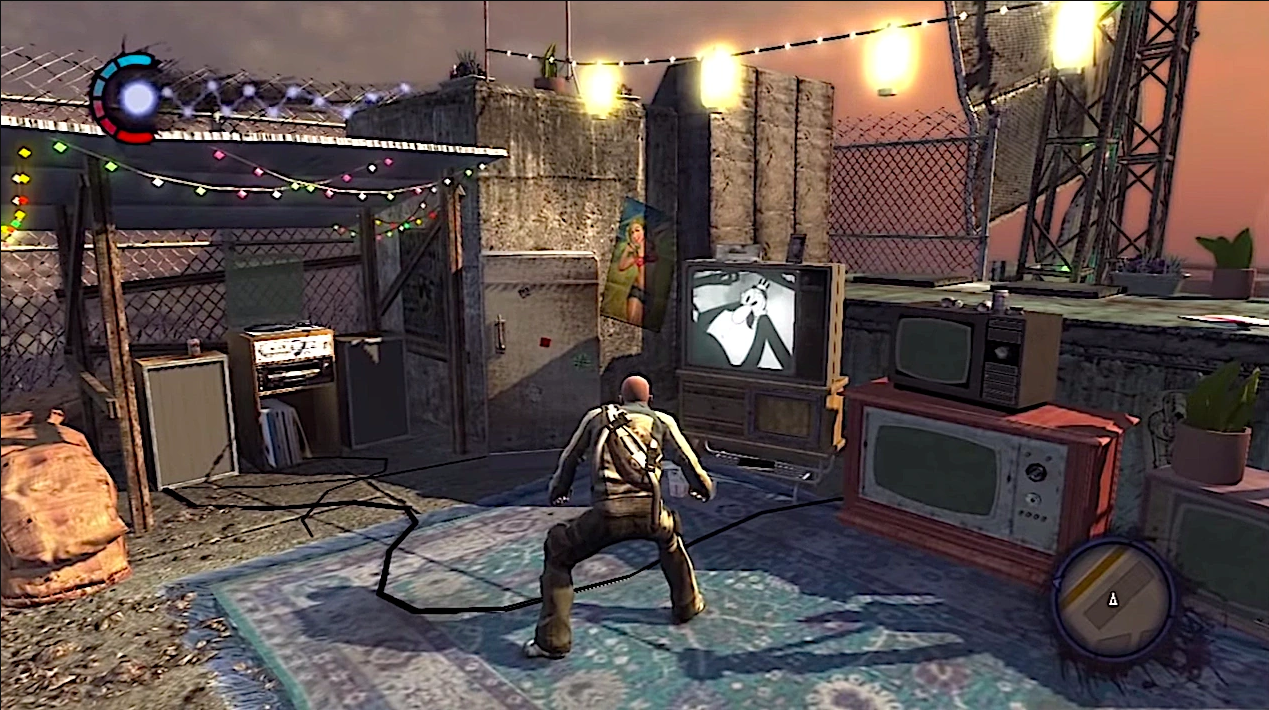
How about a comeback, Cole? Cole? Can you please stop watching television and look at me. Cole? COLE.
The mid-to-late 2000s were a special time for gaming. If you weren’t there, this may seem quaint. If you were there, this may seem delusional. But, for me, as someone who was still new in the gaming industry and who was experiencing all the thrill and joy of newly engaging with an old love, I look back at that time with heaps of fondness.
We were in the middle of what I consider to be the last great console generation. The Xbox 360 and PS3 had both hit their stride. Online gaming had been seamlessly integrated into consoles. The Nintendo DS was rocking the handheld space. The Nintendo Wii redefined interactivity in the home. Titans like EA were moving outside their comfort zone with a slew of new IP. Rock Band brought everyone in the house together for nightly jam sessions. Altaïr donned the assassin’s cowl for the first time. Modern Warfare blew everyone’s minds and set a high standard for first-person shooters. It was a golden time. And while the years since have provided us with countless incredible gaming experiences, there was just something magic about those days.
Gaming seemed aspirant. On the cusp and boundless. New problems needed new solutions. New ideas were popping up daily. Game development was hard—and I, personally, had a particularly rocky time from 2007-2012—but it still felt scrappy, even with a team of hundreds.
And among all this, even the concept of what a developer is was being challenged by a young British woman named Zoë Mode. Zoë loved to hang out in MySpace (as was the fashion at the time), play SingStar, have fun with friends. She was lighthearted, joyful, and didn’t take life too seriously. She was youthful and ambitious. Naturally magnetic, she had a charm and a wit that drew you in.
She was also 90 people sharing an office space in Brighton, England.
Originally a division of Kuju Games called Kuju Brighton, Zoë Mode shifted from a blandly named offshoot to a developer with identity. Going to the website back in 2007, Zoë was front and center. It was about her. Who she was. What she liked. The intent was for the studio to develop games for people who overlapped Zoë in interests and personality. Did you relate to Zoë? Then you might like the games she likes. The ones she makes.
While numerous studios throughout time have had names that spoke to their origins and expertise, the concept of “Zoë Mode” spoke to their audience.
It was a brilliant idea.
Zoe Mode’s signature and the studio’s logo.
Zoë went on to create numerous dance games, exercise games, singing games, and party games. She also released one of my favorite vibe and chill puzzle games of all time, Chime, and the underappreciated Kinect title, Haunt. She did good work that aligned with her aspirations. She had a vision and she went toward it. I’m sure there’s tons of tea from behind the studio’s curtains but, to this outside observer, Zoë made, for the most part, the games she wanted to play.
Sadly, like so so so many studios from that time, Zoë Mode left the gaming space. Where she is now, no one knows. I like to think she’s living a carefree life somewhere. Probably near the ocean. Coast of England maybe. Or Ibiza. Maybe she moved to the States, poor girl, and is living in Santa Monica, making daily trips down to the pier. She still busts out her DS now and then, tapping that screen while swaying on her hammock. Friends look forward to her annual Karaoke parties. Close friends attend her morning Zumba workouts.
What I miss isn’t Zoë Mode directly. What I miss is her spirit. I miss the environment that allowed her to happen. I miss playfulness in big games. I miss studios messing around with new, sometimes flawed technology. I miss transparency—authentic or not—between studios and gamers. I miss the feeling I had then.
I look around today and I see a lot of product in the AAA space. From a business perspective, the problems are solved and the only task now is finding the new niches. Big swings are punished. More than ever, projects are boom and bust. Developers are scared. Talented people are fleeing the industry. What I miss is the sense of hope I had then. Look, even Zoë stamped out a lot of product with numerous iterations on song and dance titles but you can still feel a person behind all that formula and licensing.
It might be the old man in me. The one who’s seen a lot. The one who struggles with feeling fulfilled. The one who wishes he’d made better use of his own time. But it’s also the young kid in me. The one who wants to play. Who wants new ideas and new experiences. Who plays games to glimpse other people’s dreams. Who wants to hang out, have fun, and get away for a while.
I don’t know where you went, Zoë Mode. But I hope you’re happy there. I hope, one day, you or maybe someone a lot like you shows up again. To tell everyone it’s okay to be people. It’s okay to want more. It’s okay to work toward your own dreams. That you’re enough. That what you like has value and that you can and should make stuff even if it’s just for you.
Until then, thanks for the time you gave us, Zoë. Let me know when the next karaoke night is.
I was first approached to write a short story for Vigilance Press‘s wuxia-fantasy setting, Tianxia, back in 2010 or so. I immediately agreed and got to work getting familiar with the world they were putting together. I eventually handed in an okay piece of writing and, aside from maybe a few correspondences, that was it.
For fifteen years.
Then James Lowder, a lauded editor and anthologist (especially in the tie-in space), pinged me out of nowhere to tell me the book was back on—and he had notes on my story. I was shocked. Pleasantly so but still. I had totally written off the book, knowing very well the trials of being a small publisher and figuring any one of a hundred scenarios played out to sabotage the outfit’s plans. Hearing now that the collection was back on and someone like Jim was at the helm made me smile.
I went beyond the notes—which were good as of course they were—and rewrote large portions of the story. Rebuilding an old work isn’t something you get to do often—unless you choose to do so on your own time. I handed in a fresh copy that I was much happier with, had a little editorial back and forth, and eventually wrapped it up.
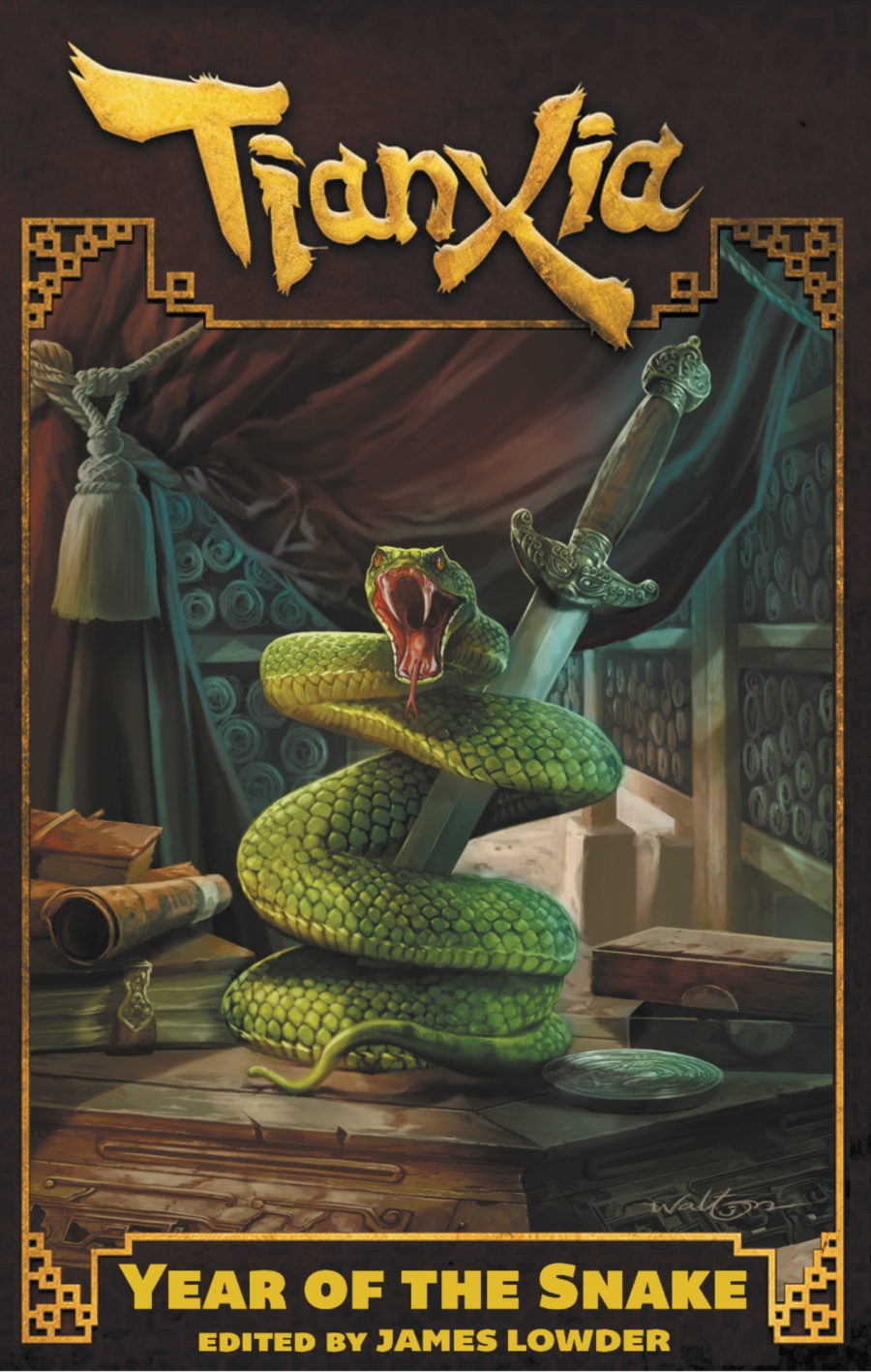
As did many others. And our efforts were put together into this short story collection right here:
My work sits alongside some pretty esteemed company: Jaym Gates, Eloy Lasanta, Robin D. Laws, T. S. Luikart, Jack Norris, Aaron Rosenberg, Gareth-Michael Skarka, Allen Turner, and Michael R. Underwood. (List copied directly from the website.)
You can get a copy in PDF or POD through DriveThruFiction. If you get a chance to read it, I’d like to hear your thoughts. Also reach out to anyone whose work you enjoy. I promise a kind email can save an entire week for any creative.
Hard for me to believe my last post here was back in September of last year. Since that time, I got married, spent time with my kids, celebrated the holidays, and then ran smack dab into a wall as the new year reared its head. 2026 has been challenging on all fronts, my friends, but I am a Pollyanna to my core and I continue to find the light.
Part of finding that light is reflecting on possibilities and finding inspiration on ideas never fully realized—but that are aching to be. Both my own ideas and those from other minds. In this post, I want to talk about some games that were announced but never released. Games whose concepts have stuck with me for decades even if I only ever saw a few screenshots and read a brief description. Come with me, folks, to the Land of What Could Have Been.
The City of Metronome
I want to start this list with a banger. Tarsier Studios‘ The City of Metronome was a puzzle-platformer set in an eponymous city kept under the thumb of the Corporation, an entity that dictates every citizen’s every move. You are a young engineer named Tin who gets wrapped up in the plight of a girl named New who has run afoul of the Corporation and is now on the run.
Announced in 2005 by, the game never saw release but the developer went on to create the lauded Little Nightmares series—so they did okay. As can see in the above trailer, Tin stealthes across a clockwork city, avoiding the amazingly-named Metrognomes—the souls of children now trapped in machines—and the Scouts, the city’s camera-headed police force. recording and playing back sound to solve puzzles and get past obstacles.
A key gameplay mechanic revolved around the usage of sound to escape trouble and solve puzzles. The player would capture audio from around the city and play it back, altering the pitch and tone as needed. I don’t fully know what that meant in application but the designer brain in me goes crazy with the possibilities. That being said, some reports claim the game concept was abandoned because they couldn’t find the fun with their sound-based gameplay. I am curious if, with the game advances over the past twenty years, they couldn’t solve whatever issues they were having.
End of the day, we will never know. The quality of Tarsier’s flagship horror series makes me pine all the more for what City of Metronome would have been but I also have to trust its development was cancelled with good reason.
(If the visual aesthetics of Metronome interest you, I encourage you to play Compulsion Games’s underappreciated emotional puzzle-platformer Contrast. It’s not 1:1 but these two definitely share vibes.)
Eight Days
Up there with Agent and This is Vegas, Sony‘s cancelled crime game Eight Days is a name that comes up a lot when folks talk about PS3/360-era cancelled games. I clearly remember seeing that E3 trailer for the first time and being damned excited about it. I was still new in the game industry and had that young kind of fire for what was happening in that field.
Taking inspiration from the sardonic action-crime films that dominated the 90s—namely the works of Robert Rodriguez and Quentin Tarantino*—the trailer promised a high-action, high-octane crime epic saga across America. The way the gameplay seamlessly integrated with cinematic moments is still something modern games are just taking advantage of. The trailer oozed cool and I couldn’t wait to get my hands on it.
It’s a shame that I never will.
Other details eventually released about the game include the player taking on the roles of dual protagonists with competing objectives, a real-time clock that set the time of day to when you were playing, and a story that spanned eight US states. Some outlets report the level of ambition is what ultimately killed the game just a couple years after its announcement. Whatever the cause, its cancellation stung. I love a game with big ideas and Eight Days had some real good ones—especially for its time.
The spirit of the game lived on in titles such as Saints Row, WET, Chili Con Carnage, and numerous others but Eight Days wore its inspo so baldly and so boldly that I still get excited thinking about what a game with those ideals and in that era could have been from a first-party developer. As it is, I will never know. And the time for such a game has passed—though I’m sure the zeitgeist isn’t too far off from bringing it around again.
*And Guy Ritchie and Joe Carnahan and…
Data-Fly
In a world and location unknown, an entity emerges from a capsule in the desert, a nanotech artificial intelligent lifeform called FLY. FLY is given orders through her internal programming and told she is to follow out a directive to release her creator “Azadeh” from confinement, deep within a military facility, located in a canyon side near her location. However, the expected activation time for FLY unit is found to be 2 decades late, and the location of Azadeh has changed. Now FLY must unravel the location of Azadeh, without being captured herself.
Announced in 2004, Data-Fly was a stealth-action game in development by ORiGO Entertainment. You played as an artificial lifeform whose nanite-powered suit could replicate the abilities of creatures and machines she scanned from the environment. That is such a dope concept. And while frustratingly little ever came out for the game, we did some screenshots and a teaser trailer that shows off one single example of that ability.
Building a repertoire of abilities you used to navigate the environment, solve puzzles, take on baddies, and upgrade your suit is pure playground for any game developer. I am sure a game of this generation would have had to limit its arsenal somewhat, you did have Rare’s Kameo: Elements of Power giving the player a whole bunch of fun options—so this could have been something really cool. Sadly, this game exists only in history books.
I don’t know why Data-Fly dug its claws into me as much as it did but I have been thinking about this for a damn long time. Its creator, ORiGO went on to release a handful of games but seems to have stalled since then.
Bonk: Brink of Extinction
I’ve talked about Bonk before and I will talk about my favorite paleolithic platforming protagonist again and again. Bonk’s Adventure is a top game for me and I was so stoked when this game was announced. In Bonk: Brink of Extinction, the prehistoric hero was evolving from 2 to 2.5D and gaining a bunch of new abilities (and hairlines!) but the core concept remained intact. Platforming, head bonking, egg-headed dino foes, and amazing music. The trailer below is light on gameplay but it was enough to get my noggin throbbing.
I recall seeing this trailer around the same time as a new Splatterhouse was announced so, needless to say, 30-something-old me was super excited to see his two favorite TurboGrafx-16 games seeing new light. While Splatterhouse eventually saw release (after a reportedly tumultuous development), Bonk: Brink of Extinction fell off the edge and disappeared forever. A build did slip out some years back so if you want to watch a video playthrough of it click that link you just read.
Bonk, you big bald-headed beauty, you deserve another chance at life. While this game may have gone the way of the dinosaurs, my hope for you could survive a hundred meteor showers.
How About You?
Those are four cancelled games that have stuck with me, kept me longing for their potential, and still inspire something deep within me. How about you? What cancelled games and abandoned projects stayed in your brain even after cancellation? Which ones do you long to still play?
I know almost all of my recent posts have been about video games. Which makes sense! I make video games, I play video games, I have a lot of opinions about video games. But video games are not the only things I love. I love books, music, movies, and television shows too. Especially weird TV shows! Especially from the 90s! I know it’s been a minute since I last posted but I wanted to talk about something so I figured I’d write up thoughts on the shows that have been on mind lately.
Are You Afraid of the Dark?
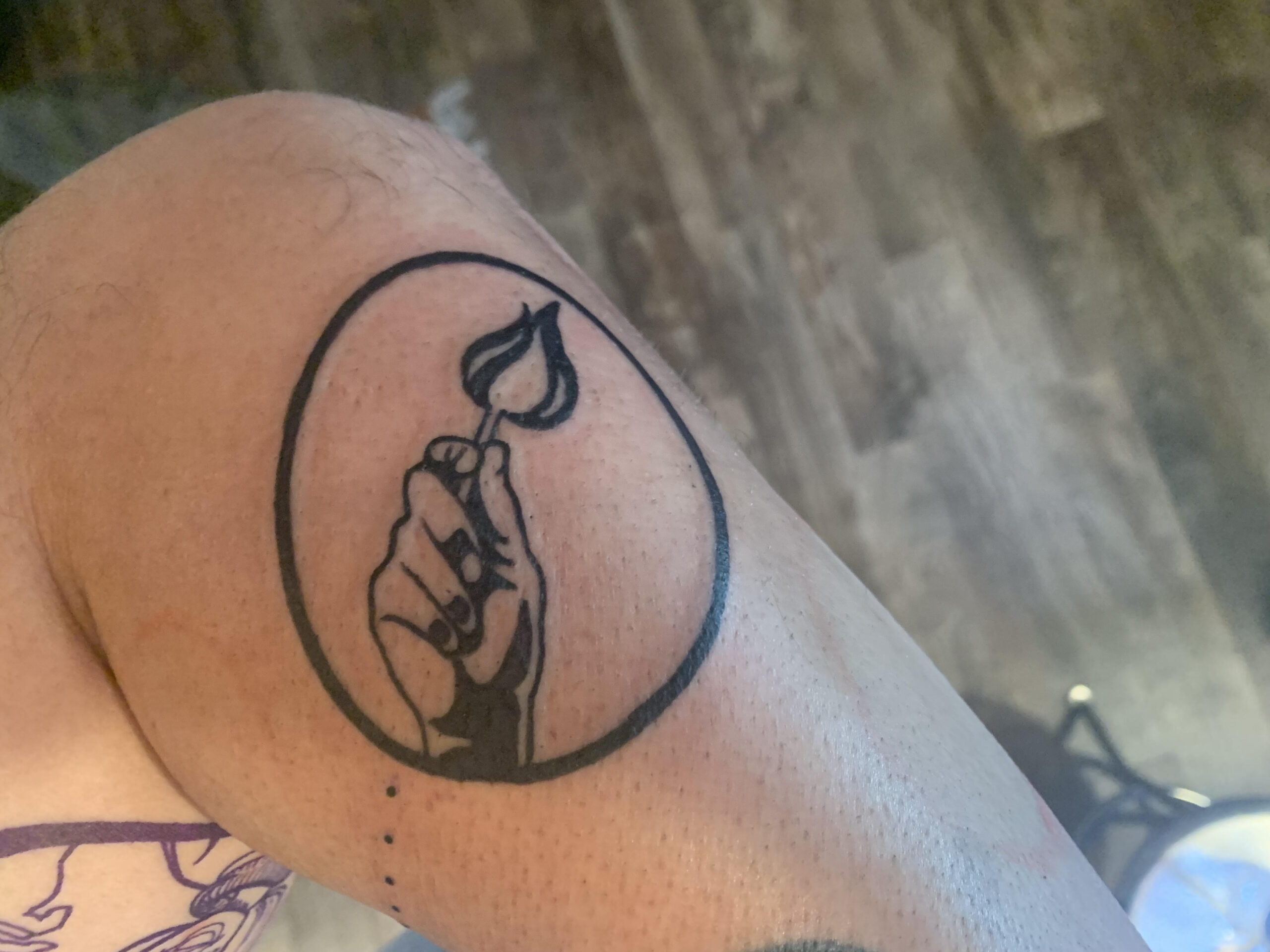
I’m going to start with one of my all-times. I love this show so much, I got the logo tattooed on my arm:
Are You Afraid of the Dark? was an anthology horror show that ran on Nickelodeon from 1990-95 and then came back for two more seasons from 1999-2000. Each episode focused on a different terrifying tale, often with supernatural elements and/or unexplained phenomena. An easy compare to Goosebumps, AYAOTD predates the books by two years and the show by give. In additions, it stands out from its more popular cousin by being much darker and scarier than Stine’s creation. Hey, Goosebumps had its moments and is an absolute icon, but it had more humor and would throw in wacky twists to lighten things up at the last minute whereas AYAOTD committed itself to the scare and wasn’t afraid of an unhappy ending.
The series contained a meta-narrative about teenage horror fans who called themselves the Midnight Society. These teens met around a campfire and told stories–the very tales we were watching. We got to glimpse a larger, real world and invest in recurring characters and their evolving relationships. It was an awesome addition but was largely abandoned later in the series as less and less screen time was allotted for them. Several reboots have popped up in recent years that serve as perfectly fine scary stories but the recurring structure and unique tone of the original series is what holds my heart.
Eerie, Indiana
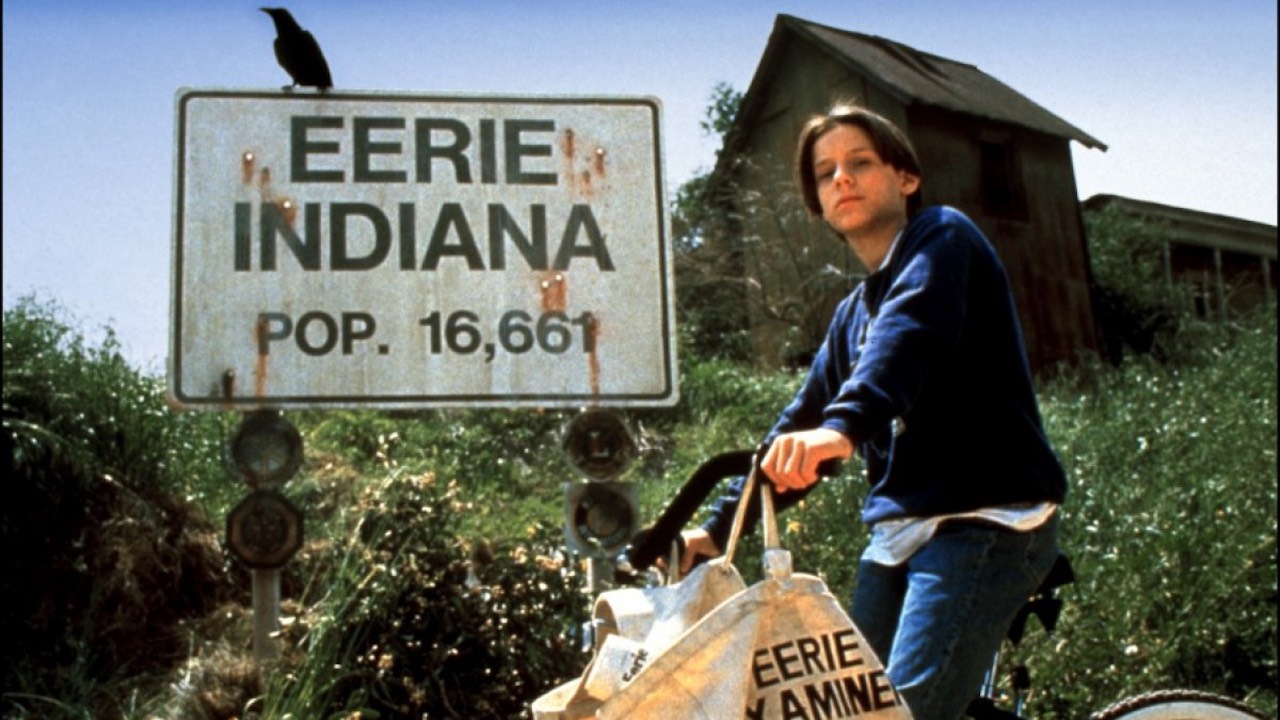
An anthology show in its own way, this Weirdness of the Week show brought X-Files-style conspiracy and Weekly World News wtf to children’s entertainment. The story focused on teenaged Marshall Teller and his buddy Simon Holmes as they try to get to heart of why their small town is just so…weird. As the only two who seemingly notice the strange goings-on, they act mostly alone and have to move under the noses of the adults who might stop them.
Eerie, Indiana ran on NBC from 1991-1992. While its run was short, the series really is all-killer no-filler. A sequel series, Eerie, Indiana: The Other Dimension, rebooted the concept with similarly-named protagonists. It ran a single season in 1998. Funnily enough, the sequel series’ first episode was titled “Switching Channels.”
Maniac Mansion
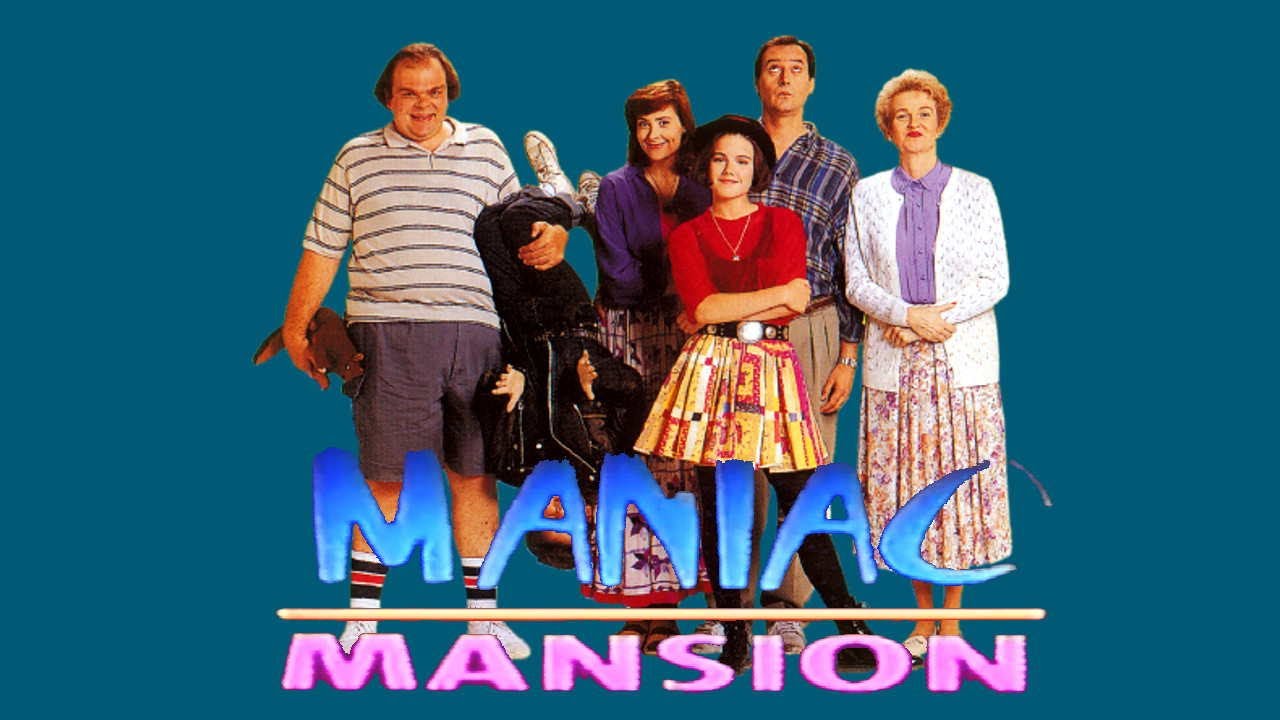
It’s safer to say Maniac Mansion the show was “inspired by” Maniac Mansion the game more than based on it. Beyond the title, the meteor, the mansion, and the main character being named Fred Edison, the show is an original creation brought to life by a team spearheaded by Canadian comedy legend Eugene Levy and featuring many other Canadian comedy legends, largely from Canadian comedy legend factory SCTV.
Focused on a family of eccentrics, including a mad scientist dad, a toddler-in-a-man’s-body, the normal teenage daughter, and a human-headed fly, Maniac Mansion is really just a showcase for random wackiness and strange family dynamics. It ran for three seasons, from 1990-93, on the Family Channel (here in the States). Though, honestly, I think I watched it much later so they must have syndicated it or brought it back? Man, I dunno.
This show isn’t gonna blow your mind. But I have a strong affinity for it and I watched it again not that long ago on YouTube. If you haven’t watched it, and you’re a fan of 90s television, I recommend checking it out at the very least.
So Weird
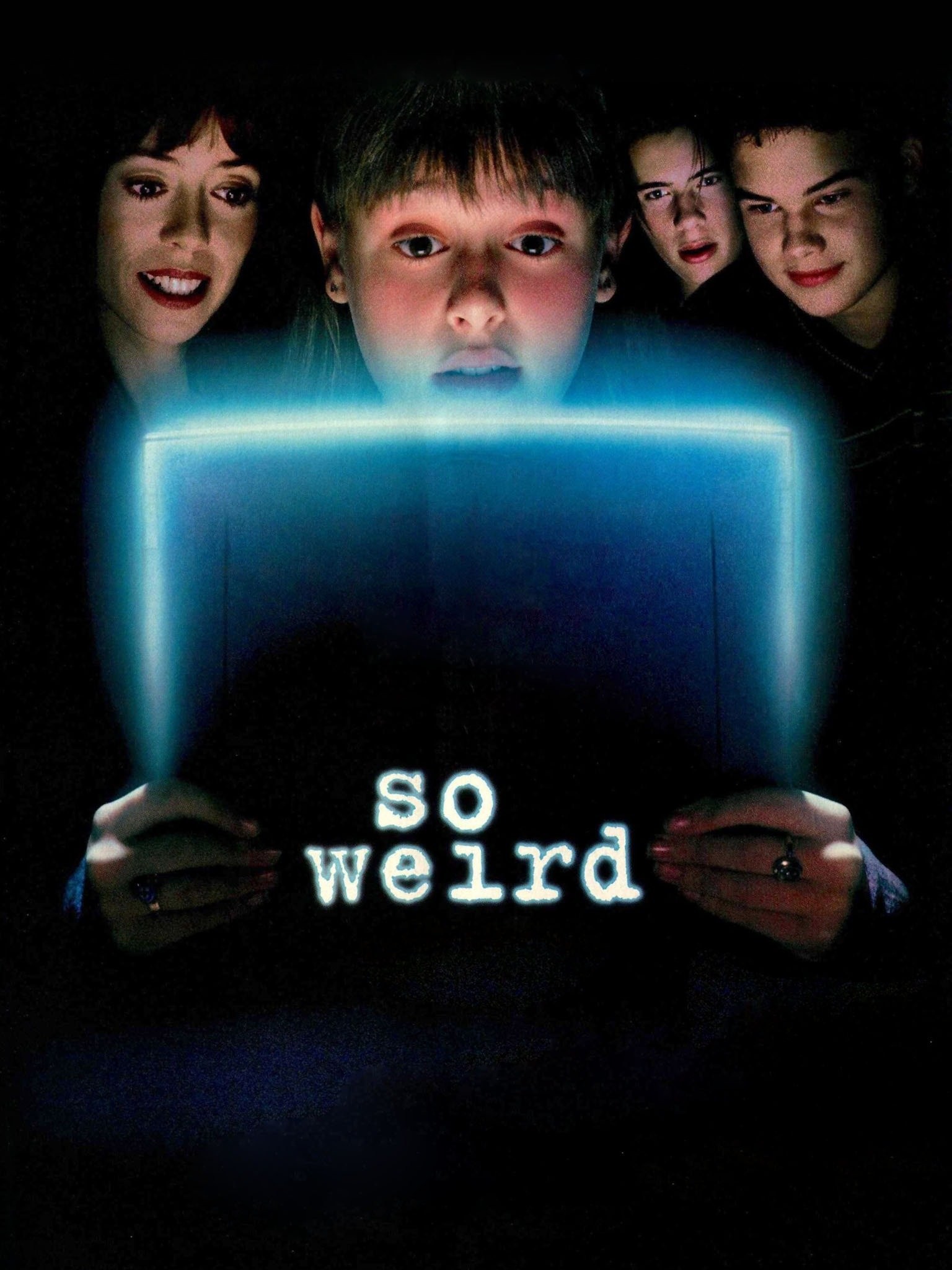
A teen girl travels the country in her rock star mom’s tour bus in this young millennial take on the X-Files formula. At every stop, she encounters small town hospitality, strange phenomenon, and the occasional extended bus repair. Alongside her brother, her mother’s crew, and some friendly locals, the girl works to thwart trickster spirits, free trapped souls, and set wrong things right as she works to learn about the paranormal world and uncover the mystery of her missing father.
So Weird ran on the Disney Channel for three season from 1999-2001. A surprising entry in the mouse’s television lineup, So Weird stood out with a slow pace, earnest tone, and focus on the then-nascent World Wide Web and online technologies. The show went through a major cast change and tonal shift with the final season that made it lighter and more music-focused. Even with that though, So Weird remains a classic.
That’s It For Now
I could go on and on about weird television, shows from the 90s, and kids entertainment–I could legit write a book on this stuff–but I’m gonna stop there. Thanks for reading! Feel free to drop a comment about your favorite weird show from the 90s.
I love video games. Love love love them. I have since I was a kid. But, for the past five years or so, I’ve been struggling to engage with the more popular games. I’m not super into forever games or competitive shooters or massive 140-hour epics. I still dabble, I still try, but it’s not where my gaming heart lies. I like the simpler games, the weirder games. The ones that, honestly, call back in some way to the games of my youth. I’m not a nostalgic person but I do find comfort in some memories and some associations with the past.
Like all of you, I am fortunate to live in a time when the gaming options are so incredibly varied. Honestly, there is interactive media out there for almost everybody. You like those massive, competitive, forever games? Oh, they’re out there. You want games inspired by the classics you grew up on? Say no more! You want spiffy new consoles that play those cartridges that are taking up space in your parents’ attic? Get you some! You want a bright-yellowed pocket-sized handheld that lets you play games with two buttons, a D-pad, and a hand-crank? That’s real specific but I’m happy to report that’s out there too! And with a stacked catalog of games and another season of titles coming out, there is no better time to get you one.
If you don’t already know, I’m talking about the Playdate.
Even though the device came out in 2022, I didn’t grab a Playdate until just over a year ago. I don’t know why it took me so long to turn the crank on getting one but I’m glad I did. I could drop multiple thousands of words on what I love about the system but I’ll let a list of facts do the talking for me.
Take It Anywhere
The Playdate is about the size of an iPhone cut in half. Maybe a bit bigger. But not much. You can charge it (with any USB-C charger available), drop it in your pocket, and it’s ready to go.
A Simple Idea Done Well
The Playdate builds on a simple premise: what if the Gameboy had a crank? I don’t know if anyone ever said that exact phrase while bringing the system to life but that’s it in a nutshell. The crank isn’t even required for a lot of the games. Yeah, for some, it’s the primary input. But, for others, it’s an alternate means of control. For a good portion, it’s not used at all. It’s just an interesting option for game devs to use.
Harkens Back to a Better Time
Okay, “better time” is subjective but the games, due to the simple restrictions of the hardware, have a simplicity and pointedness to their design that speaks to me. Games today can do and be so much that many try to be everything. Playdate games are often a couple clean concepts given room to thrive.
The Crank Works
I mean, of course, the crank works but also the crank works. It spins smoothly, has an impressive level of response and reactivity, and easily docks to get out of your way when you don’t need it. Yeah, it’s a gimmick–and they own that–but it’s also fun.
A Wide and Varied Catalog
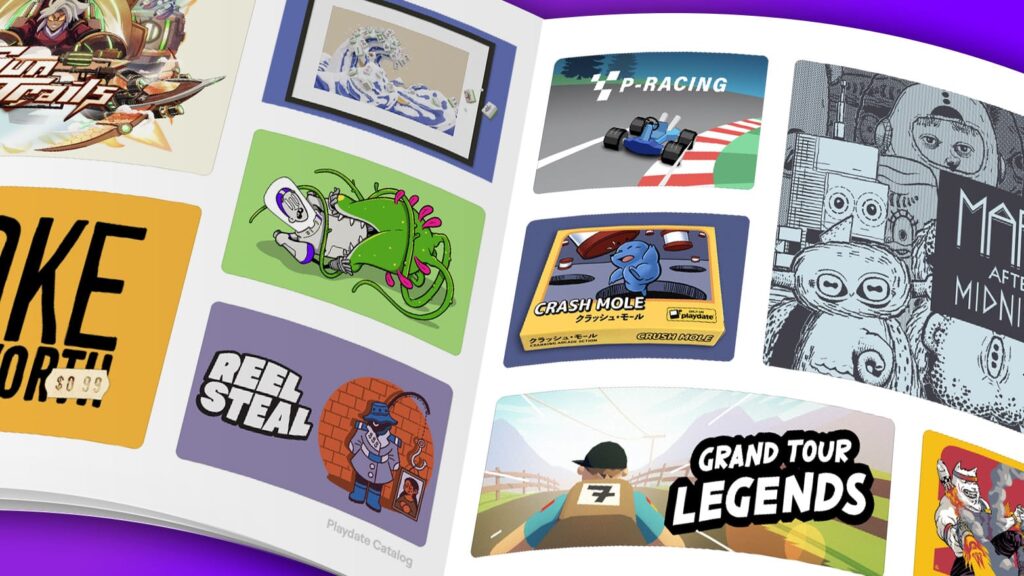
The Playdate catalog covers so many gameplay bases from platformers to puzzlers to RPGs to rhythm games to card battlers to adventure games. The catalog goes far beyond what you might be thinking. You buy most games piecemeal but the device also has seasons, which is timed content that drops over the course of a year.
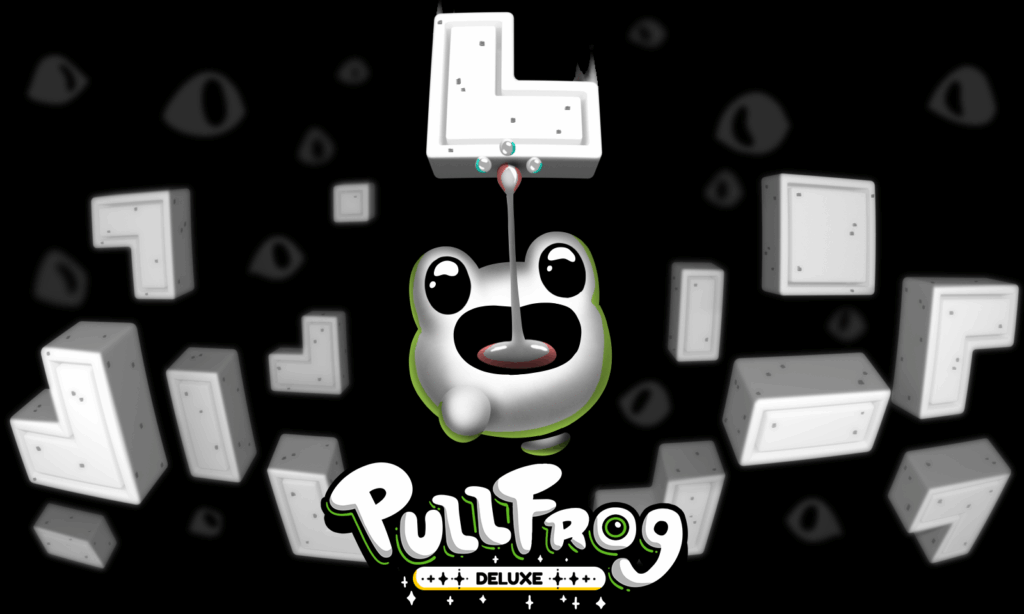
Tetris meets Frogger in Pullfrog Deluxe. As the titular amphibian, you have to sort falling blocks into their proper slots to clear lines and complete levels–all with the power of your prehensile tongue.
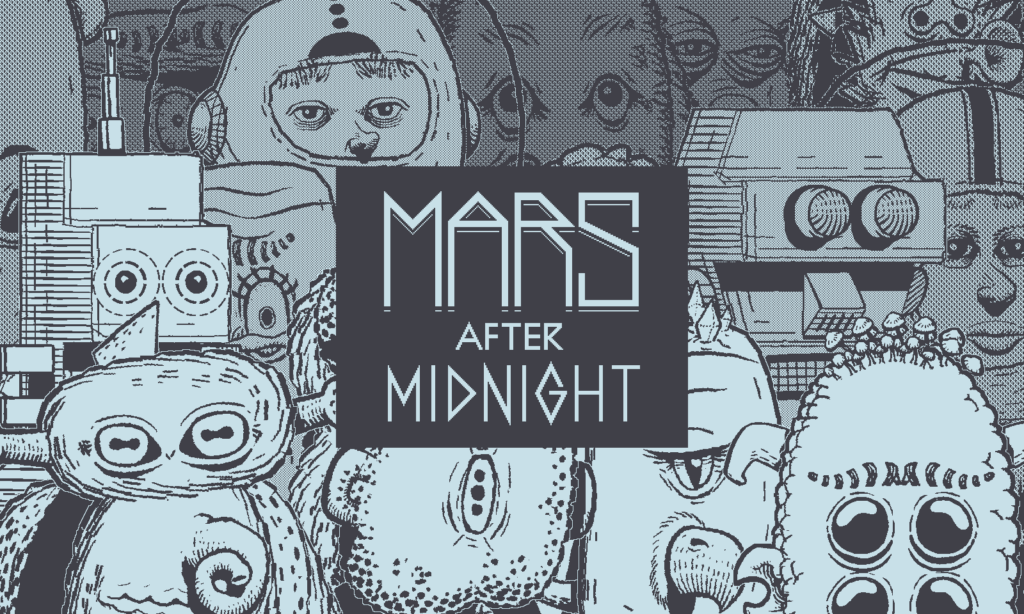
Lucas Pope, the man behind Papers, Please and Return of the Obra Dinn, brought his vision to the Playdate in Mars After Midnight. You run a community center where Martians of all stripes meet in a variety of support groups. It’s your job to make sure only the right aliens are let into the groups, the snack table is amply stocked, and the place is kept nice and clean! Trust me, you need to play this game.
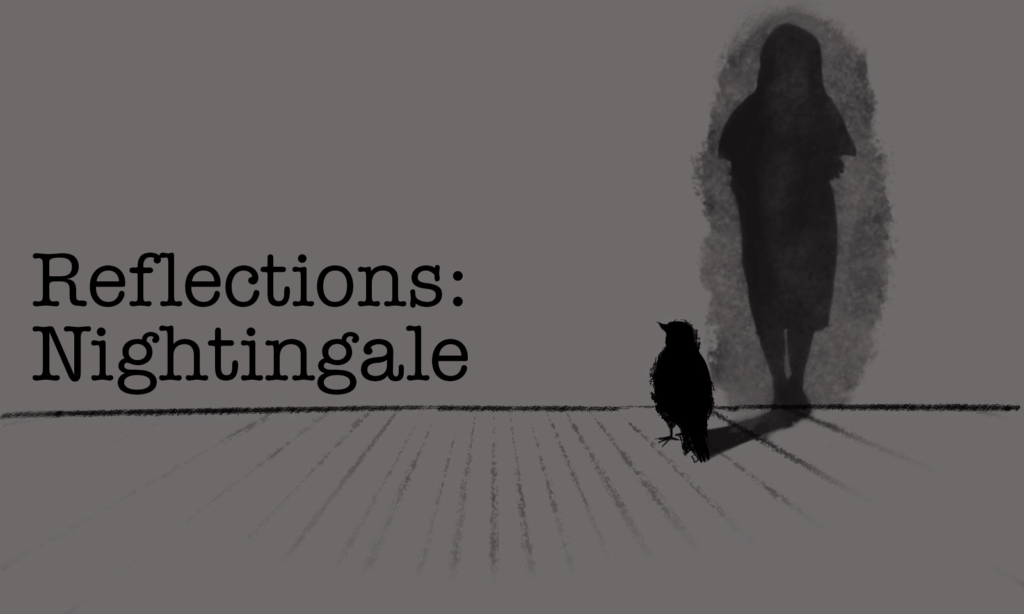
Explore a hospital being overrun by monstrosities in Reflections: Nightingale, an atmosphere storytelling game about isolation and illness.
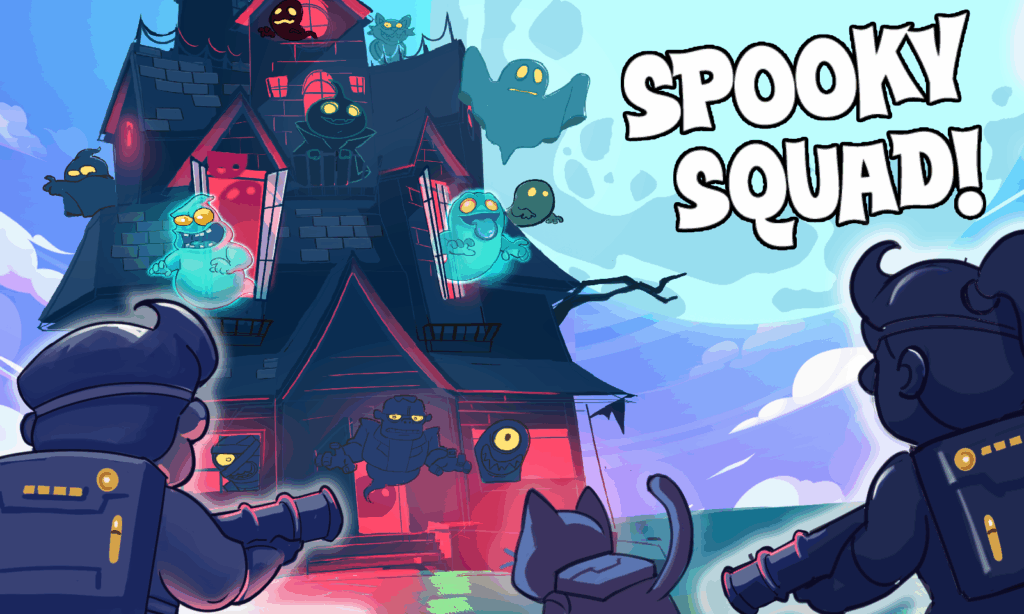
In the twin-stick action game Spooky Squad!, you clear levels full of spectres using only your spook blaster. Look, it’s a pixel art game where you bust ghosts. This was made for me so of course I’m going to put it on this list.
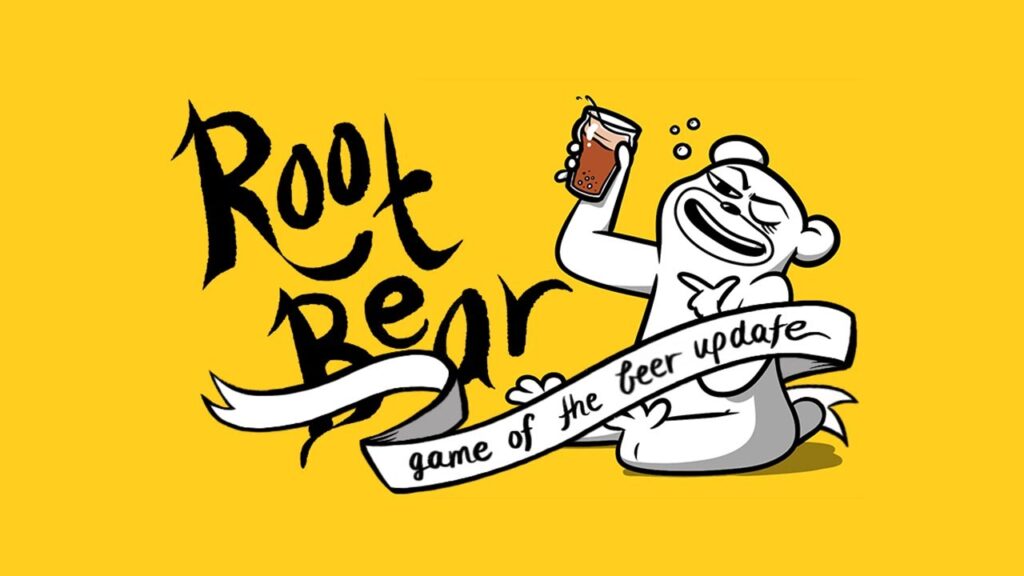
In Root Bear, your one and only goal is to pour the perfect glass of root beer for your ursine clientele. That’s it. That’s the game. You will raise an eyebrow. You will squint your eyes. You will go “what how is that fun” in lower case with no punctuation. You will buy it anyway. You will play it. You will be happy. You will get mad. You will get happy again. You will keep playing it. You will ask to be buried* with a copy just in case.
*bearied
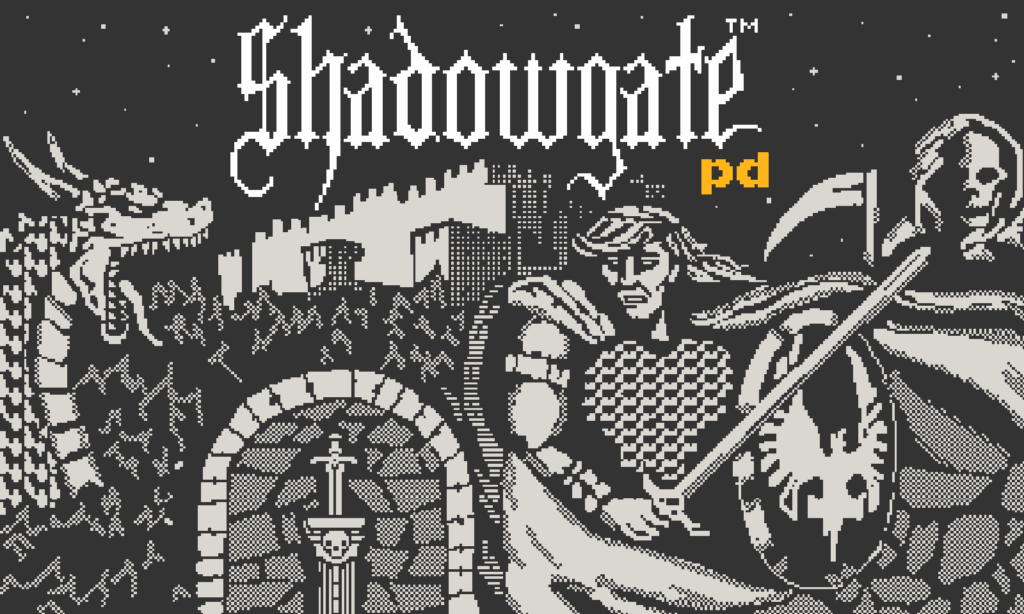
Shadowgate PD isn’t out yet but I have to talk about it because the classic point-and-click dungeon-crawler Shadowgate is being remade for the Playdate which is so insanely cool and completely unexpected that I want the entire world to know about it because stuff like this makes me so incredibly happy. Not enough nearly 40 year old games are being reborn onto weird little handhelds.
And I have barely scratched the surface here. Check out the full catalog to see what the Playdate has to offer. And then get you one. And don’t forget to pick up a cover too.
These days, with the stresses of life and the world bearing down with unprecedented pressure, I find myself seeking comfort from my entertainment. I have never been against challenging media but I have been very selective about the stories I absorb these days. More and more, especially recently, I find myself spending my gaming time with old school adventure games aimed at children. I feel a draw and pull to it that makes me think there’s a path through them. Maybe something in that field waits for me in the future. Maybe it’s just how, as someone who isn’t very nostalgic, I experience nostalgia.
Of course, me being me, I can’t talk about games without talking about how much I want to make ones like them. With Nancy Drew at over forty games and counting and a brand-new Carmen Sandiego game going strong, maybe now’s the perfect time to bring one of these back. Either way though, all of these games are worth talking about so let’s get started. If you’re familiar, I’d love to hear your thoughts. If you’re not familiar but you are intrigued, I include links where I can.
Pajama Sam
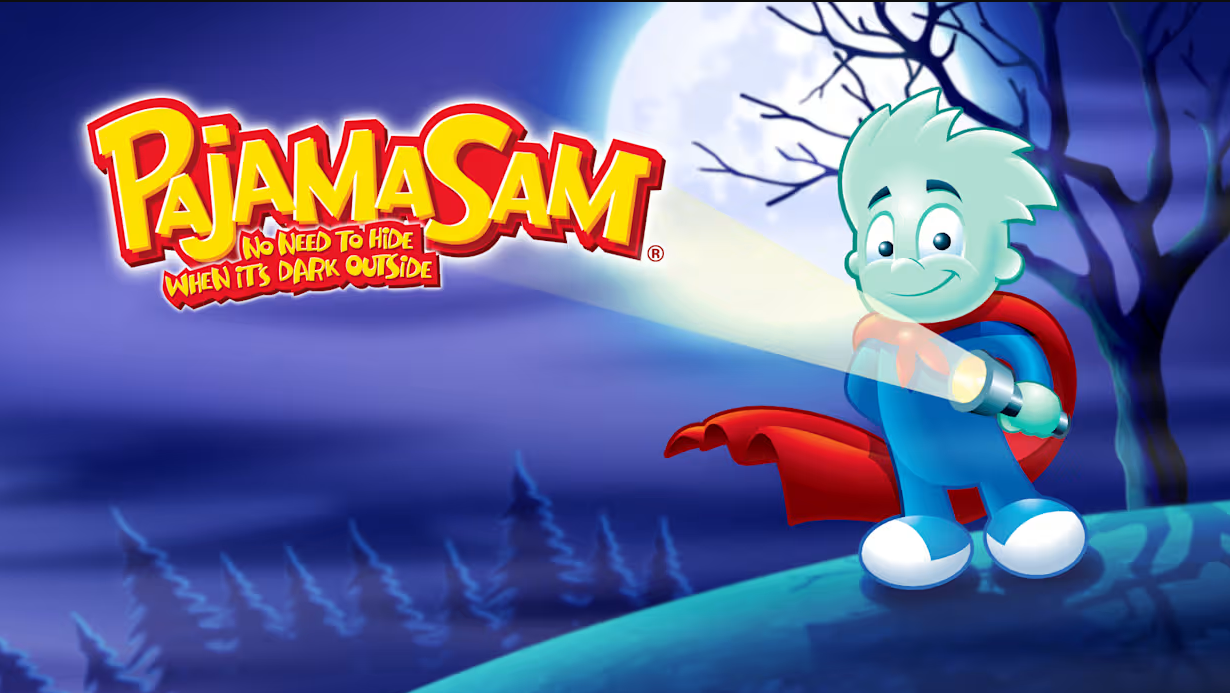
I have sung the praises of Pajama Sam previously but I can’t talk about kid-focused adventure games without including the exploits of our wild-haired hero here. This “Junior Adventure” from Humongous Entertainment sets a gold standard for adventure gaming. The art is bright and imaginative, the puzzles are intuitive, the dialogue is funny, and the world is chock full of interactivity and wow moments.
You guide Sam through incredibly imaginative worlds full of sentient cookies, vegetable revolutionaries, personifications of weather, a literal chair-man of the board, and a talking mine cart. He will find befriend darkness itself and fix weather machines and prevent junk food from taking over an island all while conquering his fears and learning valuable life lessons in the process. Pajama Sam is just great. Play it. PLAY PAJAMA SAM I MEAN IT.
Humongous Entertainment, through parent company Tommo, has kept Pajama Sam available on modern platforms but, seriously and for real, the world needs more Pajama Sam games.
Another key entry from Humongous Entertainment, Spy Fox follows the cases of our titular hero as he tracks down nefarious do-bads around the globe. Taking inspiration from sources such as James Bond and Get Smart, Spy Fox has everything you would want from a kid-focused spy adventure. He is supported by a team of experts–coordinator Monkey Penny, tech specialist Dr. Quack, and pocket-sized surveillance expert Walter Wireless–and a vending machine full of gadgets such as a fingerprint-copying utensil set, a programmable set of ice skates, and a
Spy Fox’s globe-hopping adventures will see feeding tranquilizer-laced chicken knuckles to alligators, using bad breath unlock a door, stealing a chef’s coat from a wax statue, and helping a stuntman finish his act all in service of stopping a conspiracy to rid the world of cow’s milk or prevent a towering dog-shaped robot from trampling the World’s Fair.
In addition to the humor, engaging art, and quirky interactivity of the Pajama Sam games, Spy Fox features different playthrough options. One game, you might have to solve one series of puzzles to foil the big bad’s plot while, in another, you’ll have to thwart a completely different set of plans.
Spy Fox is an easy recommendation for fans of the genre. All five Spy Fox games are available on Steam, the first three can be found on the App Store, but only the first one is available for the Nintendo Switch.
Like his pajama-clad stablemate, Spy Fox is more than deserving of a comeback and it is my sincere hope he comes out of retirement.
(This is the last I speak of Humongous Entertainment but they have even more games worth checking out. I recommending hitting their website to see full list of games they have available on PC, Mac, Mobile, and console.)
ClueFinders
While many “kids games” label themselves as “edutainment” they tend to tilt far more toward “tainment” than “edu.” The ClueFinders games lean the other way with a focus on grade-specific subjects for elementary students. In fact, the first few titles were explicitly labeled as “3rd Grade” and “4th Grade” with then curriculum-appropriate focuses in geography, math, logic, and language expressed through puzzles.
The ClueFinders themselves are a diverse team of bright-minded students and, at least for the first two games, their dog, Socrates. Each game has the kids answering a call for help and venturing out to some real-world location to solve a mystery using their (but, really, the player’s) observation skills, intuition, and inventiveness.
First launched in 1998, the ClueFinders starred in ten PC games and three browser games over the course of just a handful of years. Along the way, the games earned numerous awards and accolades from gaming press and educational institutions.
You can pick up physical copies on the secondary market as well as Amazon but, sadly, they are not available for legal download.
Are You Afraid of the Dark?
Are You Afraid of the Dark? was a television show that ran in the 90s on Nickelodeon. Like the king of tween terror, Goosebumps, the show was focused on horrifying stories aimed at a younger audience. While each week primarily focused on a different tale, the show had a framing narrative where a group of teens who called themselves the Midnight Society meet up to share stories and try to scare each other senseless. While that frame became less prominent over the series run, it remains an iconic element of the IP.
In 1994, the gaming world was blessed with a fantastic little tie-in game subtitled The Tale of Orpheo’s Curse. In it, two siblings venture into an abandoned theater and run into a twisted plot that involves vengeful ghosts, electrical demons, and wax figures who may or may not be alive. A blend of first-person puzzle-solving, FMV cinematics, 3D environment, and 2D embellishments, the game uses whatever tool it needs to tell its tale. The result is outstanding. The framing narrative comes into play not only as bookends but also as a hint system for when the characters hit a dead end.
Lack of support and advertisement led to the game hitting the shelves with a thud. It deserved then and deserves now far more attention than it ever reserved. It should have launched a series of adventure titles. Trust, I have few dreams higher than working on this IP.
You can find copies of the game on the secondary market (I got my copy off eBay back in 2014). If you’re a fan of the show or of classic adventure games and you have a CD player and a copy of DosBox, it is worth hunting down a copy of the game. Sadly, there’s no legal way to acquire a digital copy.
Fun fact: One the game’s artists and designers (and the guy playing Edgar Allan Poe in the museum), Doug Snook, did illustrations for the original Little Fears and was sole artist for its tenth anniversary edition.
I love love love middle grade horror. And I love love love anthology shows. Therefore, as you can imagine, I love love love Are You Afraid of the Dark? How much do I love AYAOTD? I have its logo tattooed on my arm. It’s right next to my tattoo of…
Nancy Drew
Nancy Drew is the undisputed queen of young detectives. Of course, as I mentioned at the start of this post, Nancy is no stranger to video games. She has appeared in over forty (!!!) titles, over thirty of which come courtesy of HeR Interactive. For the most part, those games have followed a familiar formula. One that works, to be clear. And one that has resonated with audience for three decades. But I think there is room for a fresh take on Nancy Drew in the video game world. Something that shakes up the formula and offers a new perspective on the space the storied sleuth could occupy.
Whether that ever happens is up to powers beyond mine but I hope Nancy Drew continues to evolve and remain relevant. If you aren’t familiar and want to see what the world’s cleverest young detective has been getting up to, head over to Steam where you will find plenty of options. (I recommend Warnings at Waverly Academy and the White Wolf of Icicle Creek, personally, but it’s hard to go wrong, especially with the older ones.)
In Sum
Adventure games for kids haven’t gone anywhere but, with everyone shoving “kid content” into games like Roblox and Fortnite, there are far fewer being made these days. And I think that’s a shame. There is space for these games beyond just tickling the nostalgia center of some old game developer. Games like those above deserve a shot at coming back. Sure, we implement some modern polish and guidance, we build them for PC, console, and mobile, but we can keep the core, keep what makes these great, and come up with some truly spectacular games for kids of all ages.